

 Share This
In our Ask a Doc series, we sit down with physicians and other clinical experts, including those at Allegheny Health Network (AHN), for a chat on an important health topic. In this interview, we discuss the basics of choosing mental health therapy with Kerry Symon, PsyD from Spring Health.
Getting therapy to support mental health and work through challenges has become more common in today’s climate. Still, of the 20% of people who experience mental illness in the U.S. each year, less than half receive treatment. Barriers include lack of access, cost, and stigma — but sometimes it may come down to not knowing what’s available and when to seek help. If you haven’t been to therapy before (or it’s been a very long time), it can also be nerve wracking to make that first appointment.
Mental health therapy looks different today than it did just 10 years ago, including the availability of virtual therapy options and improving insurance coverage. To get insights on how to find a therapist that’s right for you, how to get started, and what to expect from therapy, I interviewed Kerry Symon, PsyD, a seasoned clinical psychologist and director of clinical partnerships with Spring Health.
Dr. Amy Cirbus: Dr. Symon, how long have you been a therapist, and what drew you to the field?
Dr. Kerry Symon: I’ve always been drawn to helping others, and after taking a psychology course in high school, my curiosity about how people navigate the world and overcome personal struggles only grew. When I lost my uncle, who was a fireman on 9/11, it sparked a deep passion for crisis response work. This passion drove me to pursue my doctorate in clinical psychology, setting me on my current path that I’ve been on for over 20 years now!
Dr. Amy Cirbus: What do you enjoy most about the work?
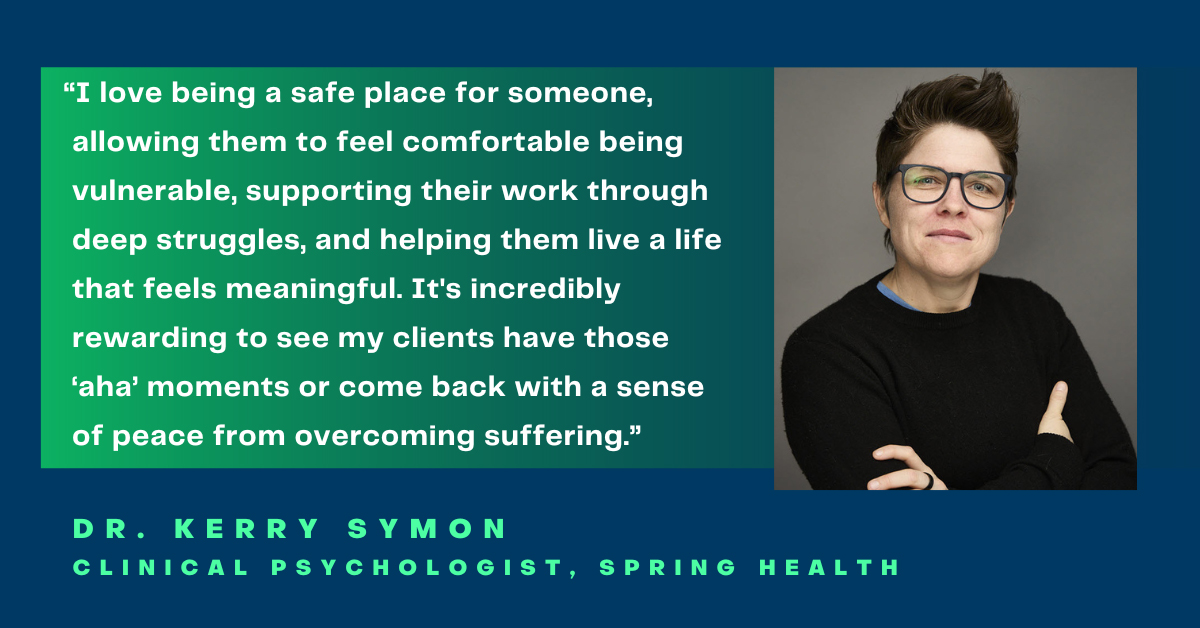
Dr. Kerry Symon: So much. I love being a safe place for someone, allowing them to feel comfortable being vulnerable, supporting their work through deep struggles, and helping them live a life that feels meaningful. It’s incredibly rewarding to see my clients have those “aha” moments or come back with a sense of peace from overcoming suffering. I truly learn from my clients. They teach me how to be a better therapist and a better human being.
Dr. Amy Cirbus: How does someone know if they “need” to go to therapy?
Dr. Kerry Symon: Going to therapy is a personal journey, and it’s all about being in tune with your inner world — your thoughts, feelings, and how they show up in your life. Here are some signs that therapy might be beneficial:
I’ll add that, even if you’re not in crisis, therapy can be great for personal growth, self-discovery, and self-improvement, providing insights, tools, and strategies for a more fulfilling and authentic life.
Dr. Amy Cirbus: How can you tell if a therapist is the right fit?
Dr. Kerry Symon: Finding the right therapist is crucial to successful therapy. As a therapist, it’s so important to me that my client feels seen, understood, and confident that I’m the right fit for them.
In terms of factors to consider when evaluating a therapist, first, trust your instincts. Pay attention to how comfortable you feel talking to the therapist and if you feel safe and understood. A good therapeutic relationship is built on trust, empathy, and mutual respect.
Next, consider the therapist’s experience and expertise in working with others who have struggles similar to yours. Ask about their training, specialties, and approach to therapy to ensure they have the knowledge and skills to help with your specific concerns or goals. Consider what evidence-based practices they might incorporate into their work. Specifically, utilizing measurement-based care — a method where providers track your progress over time using assessment data — can be highly beneficial. It ensures that treatment is effective and tailored to your individual needs, ultimately enhancing the quality of care you receive.
Also, consider whether the therapist respects your cultural background, values, beliefs, and identity. It’s important to feel accepted and respected for who you are, regardless of your race, ethnicity, sexual orientation, gender identity, or religious beliefs.
If possible, seek recommendations from trusted sources like friends, family members, or health care providers who have experience with the therapist.
Finally, many therapists offer an initial consultation where you can meet them, discuss your concerns, and get a sense of their approach and personality. With some rare exceptions, that first session isn’t free, but it is an opportunity to assess whether you feel comfortable and connected with the therapist before going any further. Spring Health actually provides you with an assessment and questionnaire at the start of your care, designed to match you with a provider best suited for your preferences and needs. Care Navigators are also available to support you as you get started and throughout your experience. Finding the right therapist may take some time and exploration, but investing in finding the right fit is worth it.

Dr. Amy Cirbus: What happens in that first appointment?
Dr. Kerry Symon: The first therapy appointment, often called an intake session or initial assessment, is a chance for you and the therapist to get to know each other and see if you’re a good fit. It sets the stage for your therapeutic relationship and future sessions. It’s a chance for you to start exploring your concerns in a supportive and collaborative environment.
You might be asked to fill out some paperwork, like intake forms or questionnaires, if you haven’t already. The therapist will introduce themselves and give you an overview of the therapy process, including confidentiality, the therapeutic approach they use, and what to expect in future sessions. They may also talk about practical stuff like how long sessions are, how often you’ll meet, and the fees.
They’ll ask you questions to get a sense of your current concerns, symptoms, and personal history. This could include questions about your family background, relationships, work, health, and any previous therapy or mental health treatment you’ve had. You’ll work together to discuss your therapy goals and what you hope to achieve. This helps the therapist understand your needs and priorities and tailor the treatment plan just for you.
If there’s time during that first session, you may dive deeper into your concerns, challenges, and reasons for seeking therapy. The therapist might ask open-ended questions to explore your thoughts, feelings, and behaviors more thoroughly. Based on what you share, the therapist may provide feedback, insights, and initial recommendations for treatment. They’ll offer their perspectives on your concerns and discuss possible strategies or approaches to address them.
The therapist will also clarify any questions or concerns you have about therapy. They’ll talk about the importance of consistency, honesty, and commitment to the process. Toward the end of the session, the therapist will summarize the key points discussed, acknowledge your efforts in seeking help, and talk about the next steps. This might include scheduling future sessions, providing resources or homework assignments, or making referrals to other professionals if needed.
Dr. Amy Cirbus: How long can someone expect to be in therapy?
Dr. Kerry Symon: It depends a lot on what you’re dealing with. If you’re tackling something specific or just need some new coping strategies, a short stint might do the trick. But if you’re diving into deeper issues or wrestling with complex mental health challenges, it takes a bit longer.
Different types of therapy have different time frames, too. Something like cognitive-behavioral therapy (CBT) tends to be shorter and focused on hitting specific goals. On the other hand, psychodynamic therapy might take longer as it involves more exploration and insight building.
Pace and duration of treatment is fluid. As you make progress, you and your therapist might decide to scale back on sessions or switch to occasional check-ins.
Sticking with therapy and showing up consistently also make an impact. If you’re committed and keep coming back, you’re more likely to see results faster.
Ultimately, the duration of therapy varies widely from person to person. You’ll want to keep lines of communication open, and expect to talk openly about your progress, goals, and preferences throughout treatment. When you’ve achieved your set goals, your therapist might start tapering off your sessions or giving you strategies to keep up the good work on your own. They’ll help you make the transition out of therapy as smooth as possible.
Dr. Amy Cirbus: What can you tell us about online versus in-person therapy? Are there pros and cons?
Dr. Kerry Symon: I never imagined online therapy would be an option when I was in graduate school! The rise of online treatment has brought significant advancements in choice and access, substantially reducing the stigma associated with seeking help. It offers convenience, accessibility, and flexibility, allowing sessions from anywhere at a wider range of times. It can be more affordable and private, and for some, it may feel more comfortable than visiting an office or public setting.
However, for severe conditions requiring close monitoring, in-person therapy provides the structured environment and nuanced communication necessary for effectiveness. It’s important to remember that easy access doesn’t equate to quality. Be sure to evaluate the platform, ensure the video software is privacy compliant, and verify that the therapist is experienced and appropriately credentialed. Many platforms, such as Spring Health, ensure clinical excellence through a strong credentialing process and adherence to the highest HIPAA-compliant privacy regulations.
Dr. Amy Cirbus: Finally, can you tell us one thing you want people to know about starting therapy that might surprise them?
Dr. Kerry Symon: It is not as scary as you might think. It makes sense that you may feel uncomfortable at first with sharing very personal information with someone you don’t know. But a therapist is trained to take care of that process and build a rapport which diffuses fear and anxiety. Once they start the journey, I think many people are surprised by how comfortable they become with the therapy experience.
 Kerry Symon, PsyD, has a doctoral degree in Clinical Psychology from the Wright Institute. In addition to being a clinical psychologist, they serve as director of clinical partnerships at Spring Health.
Staunchly devoted to safeguarding and lifting the most disenfranchised people, Dr. Symon has 20+ years in both nonprofit sector implementing and overseeing evidenced-based programs as well as administrative and clinical operations for large Employee Assistance Programs. Dr. Symon is an experienced, dynamic leader deeply committed to delivering the highest level of care to staff and clients. Adept at mediating across multiple divisions within an organization and strengthening relationships among staff, peers and executive leadership, they have been highly successful in integrating evidenced-based models of care with administrative operations, policies and regulations.


Highmark Health and its subsidiaries and affiliates comprise a national blended health organization that employs more than 42,000 people and serves millions of Americans across the country.
Entire contents © Highmark Health. All Rights Reserved.
Highmark Health is an independent licensee of the Blue Cross Blue Shield Association.

 Need to find info about providers, prescriptions, coverage, claims, ID cards, or health spending or savings accounts? If so, your Highmark member site is the place to go. (It’s separate from this blog.)