

 Share This
In our Ask a Doc series series, we sit down with physicians and other clinical experts, including those at Allegheny Health Network (AHN), for a chat on an important health topic. In this interview, we talk with Dr. Craig Alpert, a cardiologist at AHN Cardiovascular Institute, about hypertrophic cardiomyopathy.
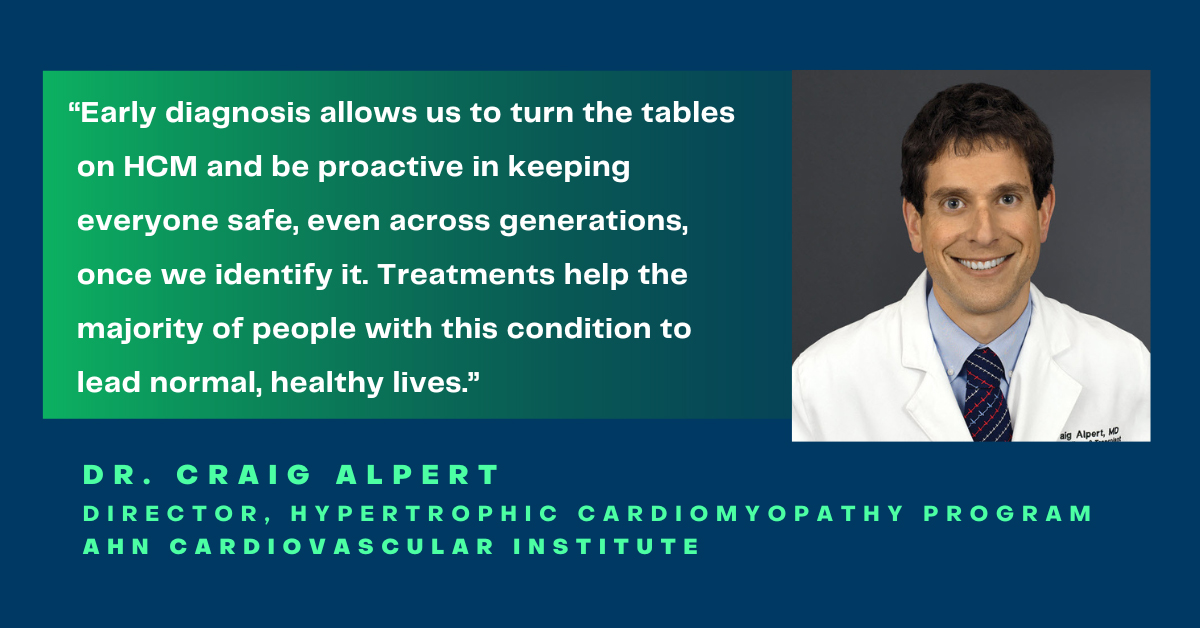
Hypertrophic cardiomyopathy, or HCM, is a condition in which the heart muscle is abnormally thickened in places where it shouldn't be. It affects at least 1 in 500 Americans, with some estimates being higher, and can sometimes be a cause of congestive heart failure or abnormal heart rhythms, including cardiac arrest.
To learn more about this important topic, I spoke with Craig Alpert, MD, a cardiologist at AHN Cardiovascular Institute and director of its Hypertrophic Cardiomyopathy Program. In 2023, the program, based at AHN Allegheny General Hospital, earned Center of Excellence recognition from the Hypertrophic Cardiomyopathy Association.
Megha Pai: What led you to cardiology and the field of medicine?
Dr. Craig Alpert: The part of medicine that's always been the most fulfilling to me is developing long-term relationships with our patients. The opportunity in caring for people with HCM is to accompany them from the time of being diagnosed with a scary condition and navigating the early evaluation, to starting treatment, and then seeing them return to living life. It's incredibly rewarding and one of the parts of my job that I love the most.
Megha Pai: Can you describe a bit about your specialty?
Dr. Craig Alpert: I’m technically called an Advanced Heart Failure and Transplant cardiologist. I see my role as taking care of people with cardiomyopathy, or conditions affecting their heart muscle, such as HCM. I was really honored and excited to be involved in the launch of our HCM program at AHN in 2019.
Megha Pai: Can you explain at a high level what HCM is?
Dr. Craig Alpert: Hypertrophic cardiomyopathy is a scenario where somebody's heart muscle is abnormally and unusually thickened in places where it shouldn't be. Unfortunately, that thickening leaves the heart unable to perform its regular tasks efficiently, which can lead to various symptoms and remodeling of the heart over time.
Most often, HCM is a genetic condition, in the sense that it originates from changes in our DNA. We’re born with those changes in our DNA, but we’re not necessarily born with a thickened heart — that thickening can happen over time, at different stages of life. Everyone is different — even within the same family carrying the same genetic changes, we see people with hearts that look very different.
Megha Pai: How do the symptoms of HCM manifest?
Dr. Craig Alpert: For many people, thickening happens in a particularly problematic area of the heart just below the exit door (aortic valve), which results in turbulent blood flow as blood tries to leave the heart. This is known as obstructive HCM — the blood has to navigate around the abnormal thickening in a bit of an obstacle course.
Others with thickening elsewhere in the heart (non-obstructive HCM) can develop symptoms because a thickened heart is much stiffer than it should be and does not relax well to fill for the next beat. Still others are symptomatic due to HCM’s impact on the heart’s electrical system.
Many people with HCM do not have any symptoms but may have a longstanding heart murmur or changes on an EKG that raise suspicion. Others with HCM can develop symptoms of congestive heart failure, such as shortness of breath and fluid retention. They can also develop abnormal heart rhythms that cause shortness of breath, dizziness, or palpitations. One common HCM rhythm abnormality, atrial fibrillation, predisposes them to the risk of stroke. Although thankfully not common, some people with HCM can also develop serious, life-threatening rhythms that lead them to pass out or even die suddenly. From the moment we meet someone with this diagnosis, we are assessing their risk of these rare events and strategizing how best to keep them safe.
And of course people with HCM are similarly at risk of unrelated heart conditions such as coronary artery disease and high blood pressure. Part of the detective work when we meet our patients is determining what is causing their symptoms, so we can best understand how to help them feel better. Fortunately, we have many different paths forward once we identify the underlying cause.

Megha Pai: What kind of care does AHN provide for patients living with HCM?
Dr. Craig Alpert: Here at AHN, we have an amazing HCM team. The collaboration between heart muscle cardiologists, including our seasoned nurse practitioner, Jennifer Keeley, brilliant cardiac imagers, like Dr. Victor Farah, and heart rhythm specialists like Dr. George Shaw, enables us to help our patients feel better while keeping them safe. Our program coordinator, Kathleen Ridgeway, helps to shepherd patients and their families through their unique journey. Our echocardiography lab, directed by Dr. Hughes-Doichev, enables us to monitor for disease progression. The catheterization lab performs diagnostic studies and sometimes even offers procedures to thin the problematic area of thickened heart muscle as an alternative to open-heart surgery. We also work closely with nutritionists, genetic counselors, supportive care, and behavioral health specialists.
Since HCM can affect people in so many different ways, it really demands a large team to help each individual navigate the condition. Having a cohesive multidisciplinary team ensures that we’re all rowing in the same direction, optimizing care for our patients. It also means we can tailor treatment and care to each individual's needs. That’s something we're very proud of.
Megha Pai: How has the diagnosis and treatment of HCM improved over the years?
Dr. Craig Alpert: We have seen a meteoric rise in recent years both in diagnosis of HCM, thanks to ever-improving cardiac imaging and disease awareness, and in medical treatment, thanks to a new class of HCM-specific medications.
In the realm of diagnostics, testing has progressed from detecting somebody's condition by means of physical exam and an electrocardiogram (EKG), to visualizing the thickening of the heart on an echocardiogram, to using sophisticated cardiac MRI. We’re diagnosing HCM more, not because it’s happening more frequently, but because the quality of imaging is so much better. As a result, we think the prevalence of the condition is higher than previously thought. With the imaging that we now have at our disposal, we are able to see more subtle versions on the spectrum of severity, and we can also search for it more proactively.
Along the same lines, our understanding of HCM’s genetic basis has also evolved as has the related field of reliable genetic testing. This has enabled us to understand better how HCM develops and impacts people, and it also allows us to study families to learn who may be at risk of developing this condition (and similarly who no longer needs to worry about it). HCM is passed down in an autosomal dominant fashion, meaning that there's a 50/50 chance of a child of an affected parent being a carrier of that risk factor. So, from a diagnostic standpoint, we can identify not just people who are affected but also people at risk because they carry a genetic mutation that may predispose them to it. Fortunately, not all carriers of the genetic mutation will develop a heart condition, but they must be watched closely.
Megha Pai: That is fascinating — you can see a genetic mutation in one parent which could determine a child possibly getting the condition, even if the parent hasn't manifested symptoms?
Dr. Craig Alpert: Right, and genetic testing in affected families helps us understand who we need to watch closely, and when we can offer reassurance as well, rather than worrying that everybody is at potential risk solely on the basis of family history.
Megha Pai: What about treatment — how has that evolved and what do you think will be the biggest advance in the future?
Dr. Craig Alpert: On the treatment side, there's been a similar, paradigm-changing approach to medical management, with the introduction and FDA approval of a new class of medication called cardiac myosin inhibitors. These are game changers — essentially small molecules specifically designed to help people feel better at the level of the heart muscle cell. Combine those new options with several decades of experience improving procedures in the cardiac catheterization lab and HCM-specific surgeries, and we can really help people with HCM to live long, healthy lives and manage their symptoms.
As for the future, science fiction is becoming reality, and we’re hopeful that these conditions, which are rooted in a genetic mutation, can ultimately be cured through gene therapy.
Megha Pai: In 2023, AHN was recognized as a Center of Excellence by the Hypertrophic Cardiomyopathy Association (HCMA). What does that mean from a patient perspective?
Dr. Craig Alpert: The HCMA is an incredible organization, created by and for patients with HCM. Its fundamental purpose is to ensure that people with HCM have access to state-of-the-art, comprehensive care. It truly is a patient-focused organization and excels in patient advocacy, so recognition as an HCMA Center of Excellence is very meaningful — it celebrates our patient-centered approach and high-quality multidisciplinary care for patients and their family members.
There can be a lot of moving parts in the care of people with HCM, and getting to the healthiest outcomes requires strong coordination and infrastructure that enable truly holistic care. For example, if a patient with HCM becomes pregnant, an obstetrician with a level of expertise is essential to ensure that mom and baby are safe. Our program is able to coordinate all of the logistics and ensure that the appropriate teams are involved and collaborating.
We’re incredibly proud to have earned HCMA Center of Excellence recognition, and I’m excited to see our program continue to grow.
Megha Pai: What one or two takeaways would you like people to better understand about HCM?
Dr. Craig Alpert: Early diagnosis allows us to turn the tables on HCM and be proactive in keeping everyone safe, even across generations, once we identify it. HCM is not a death sentence, and it is not synonymous with sudden death on the basketball court the way that people sometimes think. Treatments help the majority of people with this condition to lead normal, healthy lives.
As people learn more about HCM, they should feel reassured that this is a condition that can be identified and monitored. We can appropriately stratify their risk, and then we can keep them safe and healthy with comprehensive medical care. Genetic testing means there is also the opportunity to understand if other family members may be at risk so we can take steps to ensure their safety as well.
The introduction of the new class of medication, cardiac myosin inhibitors, has presented a huge opportunity to increase awareness and education around HCM. Hopefully, with that, we create a better appreciation for all of the treatment options to help keep someone with HCM safe and ensure that they lead a long and healthy life.
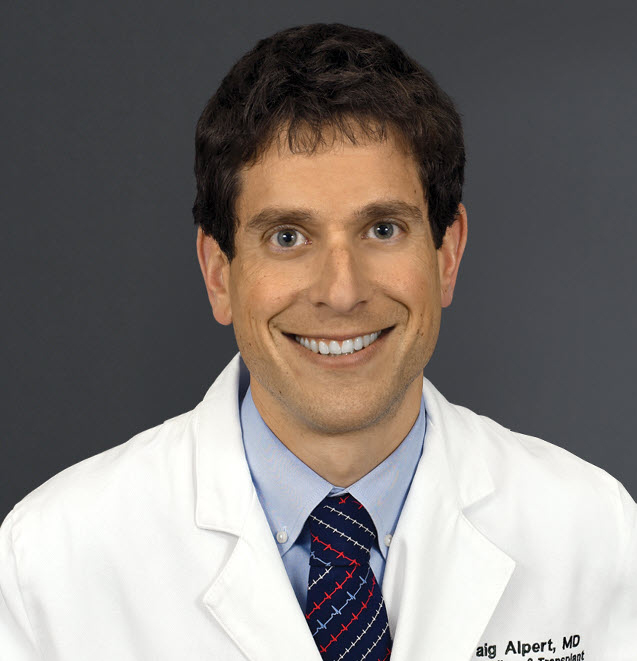 Certified by the American Board of Internal Medicine in Cardiovascular Disease and Advanced Heart Failure, Dr. Alpert provides care and treatment to people with pulmonary hypertension and heart failure, including cardiac transplantation and mechanical support, such as left ventricular assist devices (LVADs). He completed additional training in advanced heart failure and cardiac transplantation as well as in adult echocardiography.
A Pittsburgh native, Dr. Alpert earned his medical degree at the University of Pennsylvania School of Medicine in Philadelphia, and completed his internal medicine residency at the Hospital of the University of Pennsylvania. He completed both his general cardiology fellowship and subspecialty training in advanced heart failure and cardiac transplantation at the University of Michigan Health System in Ann Arbor, where he also served as chief fellow.
During his training, Dr. Alpert authored more than 20 abstracts and publications with a particular focus on symptom burden in heart failure. He organized two education-themed national meetings for the American College of Cardiology (ACC), was the principal investigator for a grant from the University of Michigan’s Department of Graduate Medical Education, and served as a consultant for the ACC’s Advance Care Planning smartphone app.
Dr. Alpert is a Fellow of the American College of Cardiology. He is also a member of the Heart Failure Society of America and the International Society for Heart and Lung Transplantation. Dr. Alpert has medical privileges at AHN Allegheny General, AHN Forbes, and AHN West Penn hospitals.



Highmark Health and its subsidiaries and affiliates comprise a national blended health organization that employs more than 42,000 people and serves millions of Americans across the country.
Entire contents © Highmark Health. All Rights Reserved.
Highmark Health is an independent licensee of the Blue Cross Blue Shield Association.

 Need to find info about providers, prescriptions, coverage, claims, ID cards, or health spending or savings accounts? If so, your Highmark member site is the place to go. (It’s separate from this blog.)