

 Share This
Editor's Update: This article was first published October 5, 2021. It was most recently reviewed and updated October 9, 2023.
Upon hearing the term “breast health,” many people will immediately think of breast cancer. There’s good reason for that: About 1 in 8 women in the U.S. develop breast cancer over the course of their lifetime, and many strong organizations and campaigns actively promote breast cancer awareness and screening, raise funds for breast cancer research, and advocate for breast cancer survivors.
However, we shouldn’t overlook other aspects of breast health — related to breast cancer or not. Radiologists Dr. Alisa Sumkin and Dr. Matt Miller believe in proactive outreach and education across the entire spectrum — everyday health to mammograms and everything in between. They appeared together on Medical Frontiers in 2021 and each continues to help with educational opportunities and as experts for the media, including coverage in 2023 of the mammogram guideline changes. They sat down with me to discuss breast health, provide inside insights on the mammogram experience, and dispel some myths and misconceptions.
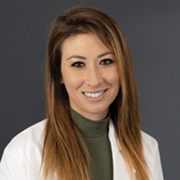
Dr. Alisa Sumkin, breast imaging radiologist, RadNet, Lenox Hill Radiology and Imaging Associates.
Emily Adamek: Can you describe the value of developing a “breast health” mindset instead of focusing strictly on breast cancer?
Dr. Alisa Sumkin: It’s a good idea to start with overall well-being and a healthy lifestyle. Daily things like exercise, diet, weight control, not smoking, monitoring your drinking — all of these impact your risk of developing breast cancer. Being proactive about your breast health also means keeping up with screenings, even if you don’t notice anything abnormal.
Dr. Matt Miller: Breast health is just one element of overall health, on the same level as things like blood pressure, weight control, and cholesterol. The lifestyle choices Dr. Sumkin just mentioned are congruent with maintaining overall health, and, as she said, they also decrease your chances of developing breast cancer.
Emily Adamek: What non-cancer aspects of breast health are people not always understanding or paying enough attention to?
Dr. Matt Miller: Good question, because not all breast symptoms involve cancer. One that I frequently encounter is infection. Patients may come in with a painful lump on their breast that needs to be evaluated, and it turns out to be an infected collection, or abscess, which may or may not need to be drained. More often than not, in my experience, that patient is a smoker. Infection correlation with smokers doesn’t get a lot of press, but it’s there. Diabetes is another potential risk factor for infection.
Emily Adamek: I would imagine that in the case of infection, you also see people who are breastfeeding?
Dr. Alisa Sumkin: Yes, an infection can develop into something that needs to be assessed by us. Any time people are breastfeeding and have pain, fever, or chills, they should be assessed by their primary care provider (PCP) and us.
Dr. Matt Miller: Another thing is tattoos and piercings involving the breast — those can get infected.
Dr. Alisa Sumkin: We also see a lot of people with nipple discharge. Not all nipple discharge is normal, but most of the time it is — particularly if it’s a milky or green color.
Dr. Matt Miller: The discharge that patients need to be more proactive about is unilateral clear discharge and bloody discharge. For pregnant patients, bilateral milky discharge often just means your body is getting ready to produce milk. Unilateral, spontaneous, bloody, or clear discharge doesn’t necessarily mean that it’s cancer, but it warrants further evaluation.
Dr. Alisa Sumkin: Breast pain is another one we see almost every day, but without an associated lump, it’s almost never related to breast cancer. I want patients to feel reassured that it’s normal the vast majority of the time.
Dr. Matt Miller: We often can’t determine the reason for breast pain. We evaluate, do a mammogram, do an ultrasound…but if we don’t see anything, I tell patients that no answer is better than a bad answer.
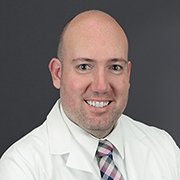
Dr. Matthew Miller, breast imaging radiologist and associate residency program director, Allegheny Health Network.
Emily Adamek: One thing I’d like to talk about is breast changes — in size, shape, feel. If you’re doing self-exams, how do you know which changes are normal and which to worry about?
Dr. Matt Miller: The most important thing is to know what your breasts feel like at a baseline. I tell patients to do their self-exam at the same time each month because breasts change in fullness and lumps depending on the time of the menstrual cycle. Pain and other sensations fluctuate, too. There’s no right or wrong time, but mid-cycle might be best, so it’s easier to remember. Do your exam, understand what normal feels like, and get it checked out if there is any change. Most of the time, it’s nothing, but it’s never wrong to get it checked. It’s better for us to assess and say it’s normal than for you to sit on it and it becomes something bad.
Dr. Alisa Sumkin: We want people to know that self-exams are still important. Ultimately, you know your breasts best, and if things change, come get evaluated.
Dr. Matt Miller: Some patients tell me that they do a self-exam every night before bed. That’s a little overkill, but monthly self-exams are paramount. I have seen studies finding that 6% of palpable lumps in high-risk patients (people determined to have greater than 20% lifetime risk of developing breast cancer) are cancerous.

A good starting point for breast cancer prevention is to focus on good overall health, including exercise, a nutritious diet, and not smoking.
Emily Adamek: In an interview with Dr. Robin Sobolewski, we covered a lot of good information on breast cancer and screening, but I’d like to dive deeper into the mammogram experience specifically and address some related anxieties people might have.
Dr. Matt Miller: Sure, great idea. I start by telling everyone to remember that the odds are always in their favor. Out of 100 patients who have a screening mammogram, on average, 10 will be called back. That just means that there is something we need to evaluate more closely. Out of those 10 patients, seven will be negative or benign. The remaining three will get followed or biopsied. Of those biopsied, only a small fraction will have breast cancer.
Dr. Alisa Sumkin: Callbacks can induce anxiety, but they’re not uncommon, and could even be a technical issue. It is also good for patients to know that they’re more likely to get called back after their baseline or first mammogram. That’s because we don’t have any comparison studies, so it’s harder to track changes.
Dr. Matt Miller: That harkens back to why it’s so important to get your yearly mammogram. The more prior exams we have, the lower the rate of callback. If a patient goes 10 years without a mammogram, we basically need a new baseline, and the callback rate is higher.
Emily Adamek: I’ve seen some online talk about delaying a breast cancer screening after you get COVID-19 vaccines or boosters. What is the issue and recommendation here?
Dr. Alisa Sumkin: The short answer is that you should not delay your mammogram.
The issue involves adenopathy, a swelling of lymph nodes under the arm which can have numerous causes, but is sometimes a sign of breast cancer. The most recent literature states that adenopathy is a common effect from COVID vaccines, identified in up to 44% of patients in a study published in 2022. Time to resolution of enlarged lymph nodes due to the vaccine has been variable, but in some cases it is seen up to 43 weeks after vaccination. Therefore, screening mammography should not be delayed due to vaccination.
Dr. Matt Miller: Similarly, don’t make the mistake of dismissing a lump or change in your breast as just being from the COVID vaccine. If you notice a change, get it evaluated immediately. Whether it's from vaccines or any other cause, we're here to determine whether a lump or change is something to be concerned about and addressed, so don't risk a delay.
Emily Adamek: What’s the importance of breast density?
Dr. Matt Miller: Breasts have two types of tissue — fat, which is the grey area on a mammogram, and fibroglandular tissue, which is the white portion that is dense milk-producing tissue and ligaments. As radiologists, when we do a mammogram, we evaluate how much of the dense white tissue we see and put that into quartiles. Patients will see a density score at the top of their mammogram report.
If zero to 25% is white, we call that extremely fatty tissue. 25-50% is called scattered fibroglandular tissue, meaning that the majority is still fat. Above 50% dense tissue, we say that it is heterogeneously dense. Mammograms detect about 70% of breast cancer, and the majority of what can’t be detected is within the heterogeneously and extremely dense category. So, if you are in those categories, we have supplemental screening modalities, such as ultrasound and even MRI. Nothing replaces a mammogram — that’s still the starting point, but if you are in that dense stratification, adding ultrasound after that increases the cancer detection rate by about two to three cancers per thousand.
Emily Adamek: Can you explain a bit more about the BI-RADS numbers?
Dr. Alisa Sumkin: BI-RADS ranges from 0 to 6. 0, 1, and 2 are what we use in screening. If a patient is a 0, they need to come back for more imaging, which may mean the image quality was inadequate or there was a finding on the mammogram which needs a closer look. 1 and 2 mean they are negative or have benign findings.
Dr. Matt Miller: 3 is probably benign, meaning the risk of malignancy is greater than 0% but less than 2%. In that case, we’ll keep an eye on it and do a six-month follow-up.
When you get to 4 and 5, that’s when we perform biopsies. BI-RADS 4 means there is greater than 2% but less than 95% chance of malignancy. Then we separate that into subcategories A, B, and C. 4A is something we still don’t think is cancer — less than 10% chance, but enough that we want to do a biopsy to be sure. 4B means a 33% chance of malignancy, and 4C means 50% or above.
BI-RADS 5 means we’re seeing all the features of malignancy, and even if a biopsy came back as benign, we would question that and typically send the patient back for re-biopsy or to have the abnormality surgically excised. BI-RADS 6 is used with patients who have been formally diagnosed with breast cancer.
Emily Adamek: What about 3D mammography — are there any misconceptions about that?
Dr. Matt Miller: A common one is someone saying, “I don’t want tomosynthesis, but I had 3D mammography.” These are the same thing. It was “the next frontier” five years ago, but now it’s standard of care and universally accepted. If you’re wondering whether or not you should get 3D, the answer is unanimously yes, and all PA-based insurance companies have to cover 3D mammography. 3D has a better cancer detection rate — two to four more cancers detected per thousand — and theoretically it may lower the callback rate slightly as well. For anyone concerned about radiation, it’s about the same as it was with plain film mammography back in the 90s.
Emily Adamek: What are the most common myths that you encounter about breast health and breast cancer?
Dr. Alisa Sumkin: Right now, we hear a lot around the COVID-19 vaccine.
Dr. Matt Miller: In addition to what we talked about earlier in terms of not delaying a mammogram after getting vaccinated, we should emphasize that neither COVID nor any of the COVID vaccines cause breast cancer. Those claims are out there, and we get some questions about this, so it's important to let people know that this isn't something they should worry about.
Dr. Alisa Sumkin: Regarding other misinformation, we see patients who don’t want a breast biopsy because they think it could cause or “seed” breast cancer. That’s not true at all. If you need a biopsy, get it. It’s not going to make things worse in any way.
Dr. Matt Miller: I also hear patients talk about thermograms — there has never been research that shows them as helpful in breast cancer detection. I’ve had patients tell me that they haven't had a mammogram in 25 years, because they get thermograms, and then it turns out they have undetected cancer. Although there has been research into blood testing and cancer, if anyone tells you that blood work will detect breast cancer right now, that’s also false. The mammogram is the standard of care for breast cancer screening.
Dr. Alisa Sumkin: I’ll add that if you want to get thermograms for some reason, that’s your choice — just please know that it’s not a replacement for a mammogram.
Emily Adamek: Other big myths I’ve heard or read include deodorant, caffeine, or even bras as causes of breast cancer.
Dr. Matt Miller: All false. There’s also never been a documented case of mammogram-induced cancer.
Dr. Alisa Sumkin: That is a big one! People should know that when you get a mammogram, it’s an exceptionally low dose of radiation.
Dr. Matt Miller: Less radiation than what you would experience on a coast-to-coast airflight.
Emily Adamek: I think it’s important to emphasize to people that if they’ve encountered or believed misinformation, they shouldn’t feel embarrassed or ashamed. Do you agree?
Dr. Matt Miller: Absolutely. If a physician laughs at you or makes you feel small, that’s not a good physician. We provide a service to the community — part of that is making sure you have good information. If there’s misinformation or misunderstanding, our job is to correct it, but in a respectful way.
Dr. Alisa Sumkin is a breast imaging radiologist with RadNet, Lenox Hill Radiology and Imaging Associates, serving patients in the New York metropolitan area. Previously, she was a radiologist specializing in women’s imaging at Allegheny Health Network from 2019 to 2023. She has interests in medical education, diversity and inclusion throughout the health care system, and health care outreach.
Dr. Sumkin was a radiology resident and women’s imaging fellow at UPMC and received her medical degree from Philadelphia College of Osteopathic Medicine. She has received several grants for research and education and has been involved in publications.
Dr. Matthew Miller is a radiologist specializing in women's imaging, with additional interests in the promotion of health care and radiology education, health care literacy and outreach, medical legal issues, and health care business strategies.
Dr. Miller joined Allegheny Health Network (AHN) in 2019, where he is a practicing breast imaging radiologist and also serves as associate residency program director. Prior to joining AHN, he was a radiology resident and breast imaging fellow with WVU Medicine, where he was elected chief resident of recruitment and outreach, and also served on the Quality of Care Committee, Resident Health and Wellness Committee, and Education Fund Committee, and taught neurobiology and ultrasound to medical students.
Dr. Miller earned his medical degree from West Virginia University, has numerous publications, and also helped develop a webinar series with the Society of Breast Imaging covering a wide variety of topics dealing with breast health.


Highmark Health and its subsidiaries and affiliates comprise a national blended health organization that employs more than 42,000 people and serves millions of Americans across the country.
Entire contents © Highmark Health. All Rights Reserved.
Highmark Health is an independent licensee of the Blue Cross Blue Shield Association.

 Need to find info about providers, prescriptions, coverage, claims, ID cards, or health spending or savings accounts? If so, your Highmark member site is the place to go. (It’s separate from this blog.)