

 Share This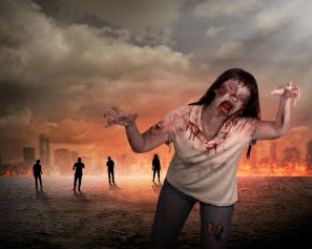
From classic horror movies like “Night of the Living Dead” and “Dawn of the Dead” to the “Walking Dead” TV series, zombies have captured the public imagination. The prospect of a full-fledged zombie outbreak, or any outbreak of contagious disease, is truly a frightening thing.
The Centers for Disease Control and Prevention (CDC) tapped the zombie craze to stress the importance of being prepared for any disaster that could endanger lives and property and disrupt our daily lives.
To get the straight scoop on how best to prepare for zombie outbreaks and other pandemics, I talked to Dr. Tom Stein, MD, an emergency physician at Allegheny General Hospital’s Level I trauma center, and an expert on emergency preparedness.
Bryce Walat (BW): Let’s start with the question that I’m sure is on everyone’s mind. First, are zombies real? If so, what are the chances of an actual zombie outbreak happening?
Dr. Tom Stein (TS): If you mean, “can dead people come to life and go around eating people?” thankfully, the answer is no. There is no germ, chemical or form of radiation that can reanimate dead bodies that we know of. So, the chances of an actual zombie outbreak, like in the George Romero movies, are zero. When it comes to other kinds of outbreaks, they certainly do exist, and the chances of them happening are quite likely.
BW: Tell me about these other outbreaks. What do we have to worry about?
TS: Pandemics — or outbreaks as you call them — have happened before, like the Black Death outbreak of bubonic plague that nearly wiped out all of Europe in the Middle Ages, the Spanish flu during World War I, or polio in the 1950s.
Even today, we’re dealing with really dangerous diseases like Ebola, MERS and AIDS. Don’t forget about the flu — it still kills thousands of people every flu season. There are threats on the horizon that will no doubt come about as bacteria and viruses evolve. And then there are threats that could come from human activities, either by accident or on purpose. Take biological weapons, for instance. In the former Soviet Union, an organization called Biopreparat experimented with and built biological weapons. Dr. Ken Alibek, a military scientist who ran Biopreparat, defected to the U.S. and warned us about the threat of these weapons. While these weapons are difficult to make and use, terrorists might steal them or buy them on the black market.
BW: What’s the biggest threat we need to be concerned about in a pandemic?
TS: Well, aside from the disease itself, the most significant cause for concern is fear. When people are afraid, they tend to panic and think irrationally. Fear can drive people to do things they otherwise wouldn’t and act in ways that are dangerous to themselves and others.
Fear comes from three main things: First, people are afraid of getting sick, of course. Second, people are afraid of the unknown. Misinformation and rumors spread just as quickly as any contagious disease. Finally, a lot of fear comes simply from not being prepared. You even see this before a big storm, where people are rushing to buy essentials at the last minute.
BW: Why are people more afraid of things like Ebola, which is a lot less common than, say, the flu?
TS: It’s all about risk perception. For one thing, few people alive today have had any real experience with serious pandemics. What’s more, the news tends to latch on to unusual and unlikely threats like Ebola, and not so much on routine problems like the flu. And that’s not a good thing because people get all worked up over a threat that isn’t very likely to happen, while ignoring threats that are likely to happen. That’s why you see people doing things like avoiding international travel out of fear of getting sick, yet many of these same people won’t get flu shots.
BW: So, how do you deal with these fears?
TS: First of all, you need to get the right information. That’s why it’s important to adequately fund public health so that we have the right people and the right knowledge to get the right messages to the public in a timely fashion. And of course, being prepared goes a long way toward being less afraid.
BW: But how does one “prepare” for a pandemic?
TS: Basically, many of the same things you do to prepare for other disasters — like storms, floods or power outages — also apply to pandemics.
For instance, make sure you’re stocked up on essential supplies before you need them. Make sure you have a plan for what you’d do if you need to stay at home for a while, or if you’d need to evacuate. Make sure that you and your family are up to date on all of your routine immunizations, and talk to your doctor about what immunizations you might need.
The CDC, the Federal Emergency Management Agency (FEMA) and the Red Cross have information on how you can prepare for pandemics and other disasters.
Keep in mind that it could take a while for things to be sorted out, and that the situation could change. That’s why it’s important to be tuned in to your local news or other official sources of information. You need to have the right information about what to do and not to do. For instance, if any immunizations or other medications to prevent or treat a contagious disease are being distributed, you need to know where to go to get them, where to go if you can’t get to where you need to go, and what to do if you are unable to take them.
I can’t stress this enough: You need to pay attention to any official instructions or directions from emergency management and public health officials. They’re there to protect you, your family and your community.
You also need to know what those instructions and directions mean so you can respond appropriately. I’ll give you an example of something that’s similar to what we’re talking about: The National Weather Service issues different kinds of weather alerts depending on the seriousness of the situation and the action you need to take. A “winter weather advisory” means that you should allow some extra time and caution when you’re driving to where you’re going, whereas a “winter storm warning” means that you should stay off the roads unless absolutely necessary.
BW: How are organizations like hospitals, schools, utility companies, businesses and government agencies prepared for pandemics?
TS: Organizations like these have plans for responding to pandemics, along with other disasters. At Allegheny General Hospital, we have plans for dealing with disease outbreaks that not only involve patients, but also our staff, to make sure that we’re properly staffed to deal with any disasters. These organizations also have regular drills where they rehearse scenarios so that if they should actually happen, they know exactly what to do.
BW: What do you see as far as the future of pandemics and how we’ll respond to them?
TS: We’re in an “arms race,” so to speak, with germs. As I mentioned before, bacteria and viruses are constantly evolving, and that means that we’re constantly trying to keep up with their defenses. We see it with antibiotic-resistant infections like MRSA.
Right now, scientists are working on vaccines, antibiotics and antiviral drugs that work differently from the ones we use today so that they can not only overcome germs’ evolving defenses, but also attack them where they have no defenses. For example, we’re developing flu vaccines that don’t have to be administered as often because they’re designed to attack parts of the flu virus that all strains have in common.
BW: What’s the one thing that scares you the most when it comes to disasters?
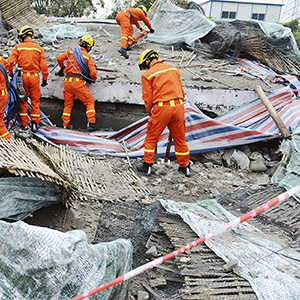
TS: What really scares me is a situation where “life as we know it” is seriously disrupted. We rely on people to run and maintain very sensitive and vulnerable infrastructure that we depend on in our daily lives, like our power grid and water and sewer systems. If a lot of those people can’t do their jobs because they’re ill or for any other reason, that infrastructure would stop working. Think of what could happen if the people who operate and maintain our power grid, water and sewer lines and pick up garbage, or the people who fight fires, patrol our streets and staff our hospitals, couldn’t do so. Or about the impact of a lot of truck, bus and cab drivers, railroad engineers, sailors, and pilots not being able to do their jobs.
Here’s a really sad and scary thing I saw when I went to work in rescue operations during Hurricane Katrina: A lot of people who depended on things like dialysis and certain medications couldn’t get them during and after the storm. So, a huge number of people became seriously ill, and many of those people died.
If you or anyone you live with has any chronic conditions or depends on any medical equipment, it’s critically important that you take that into consideration when you’re preparing for a pandemic or any disaster. For example, make sure that you have enough medications to tide you over until you can get more and spares of any medical equipment you may need, as well as backup power sources or extra charged batteries for any medical equipment that uses electricity.
BW: Thanks for your time, Dr. Stein. Any final piece of advice you’d like to give people?
TS: My advice is simply this: Be prepared, not scared.
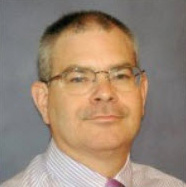 Dr. Tom Stein is an emergency physician with more than 20 years of experience working in the trauma center at Allegheny General Hospital, a Level I trauma center. He is board certified in emergency medicine. He serves as the chair of Allegheny General Hospital's disaster preparedness group, and is a member of the health and medical committee of the PA Region 13 Task Force.
Dr. Stein serves as a colonel in the U.S. Army Reserve.



Highmark Health and its subsidiaries and affiliates comprise a national blended health organization that employs more than 42,000 people and serves millions of Americans across the country.
Entire contents © Highmark Health. All Rights Reserved.
Highmark Health is an independent licensee of the Blue Cross Blue Shield Association.

 Need to find info about providers, prescriptions, coverage, claims, ID cards, or health spending or savings accounts? If so, your Highmark member site is the place to go. (It’s separate from this blog.)