

 Share This
A buzz-worthy summer blockbuster movie is sparking conversation, and its theme feels familiar: Kids today are growing up in a world where screens often compete with play.
For parents, that creates a daily game of tug-of-war. Screens can entertain, ease travel and even support learning. But when they begin to disrupt imaginative play, movement, sleep and face-to-face interaction, experts say there can be real impact on development.
More than 65% of U.S. children ages 2 to 17 exceed the recommended two hours of recreational screen time on weekdays, not including schoolwork — rates that continue to climb as children reach their teen years.
So what does a healthy balance look like?
Research suggests it’s not about eliminating screens but making sure they don’t replace the experiences children need to connect, learn and grow.
Unstructured, imaginative play helps children build creativity, problem-solving skills and emotional awareness. It also supports physical activity and social interaction — helping kids make sense of the world.
That’s why experts are paying closer attention to what happens when screens replace free play. Studies link higher screen use in young children to lower language skills and more behavioral and emotional challenges, along with poorer cognitive and psychosocial outcomes.
For families, that does not mean every television cartoon or tablet game is harmful. It does mean the bigger picture matters: what children are watching, how long they are watching, whether an adult is engaged, and what experiences screen time might be replacing.
“Screen time itself isn’t the problem — it’s what it replaces,” says Lakshmi Reddy, MD, senior medical director at Highmark Wholecare and board-certified family medicine physician. “When it crowds out play, conversation and exploration, those are the experiences kids lose that really shape their development.”
Screen use, especially before bedtime, is associated with shorter sleep duration and frequent disrupted sleep. And because sleep plays such an important role in learning, memory, mood and overall development, that ripple effect can extend into many parts of a child’s life.
”Kids are meant to move, and when screens take over, that natural movement often disappears,” Dr. Reddy explains. “Over time, that can affect not just physical health, but energy, sleep and even how kids feel and function day to day.”
Ultimately, screen time is not one-size-fits-all. Content, context and timing all matter.
For example, studies suggest passive viewing tends to be associated with poorer outcomes, while co-viewing, educational content and interactive use with caregiver involvement may be more beneficial. In a recent study, co-use was positively associated with cognitive outcomes.
That means “healthy screen use” isn’t just about counting minutes. It is also about choosing age-appropriate content, avoiding screens at key times like bedtime or during meals, and making sure children still have plenty of time for play and rest.
For neurodivergent children, screen time can play a more nuanced role. In some cases, digital tools can support communication, routine-building and learning, particularly when content is interactive or tailored to a child’s needs. At the same time, experts note that excessive or passive screen use may still impede opportunities for social interaction, sensory play and skill-building that are essential for development.
The key is thoughtful use — prioritizing high-quality content, encouraging shared engagement with caregivers, and ensuring that screen time complements, rather than replaces, other experiences.
For families trying to create healthier habits at home, a simple rule of thumb can help: Make sure screens don’t take away from the three S’s that kids need most:
“In our home, we don’t focus on cutting out screens — we focus on balance,” says Dr. Reddy. “If screen time starts to interfere with sleep, school or time together as a family, that’s our signal to reset and make space for the moments that matter most.”
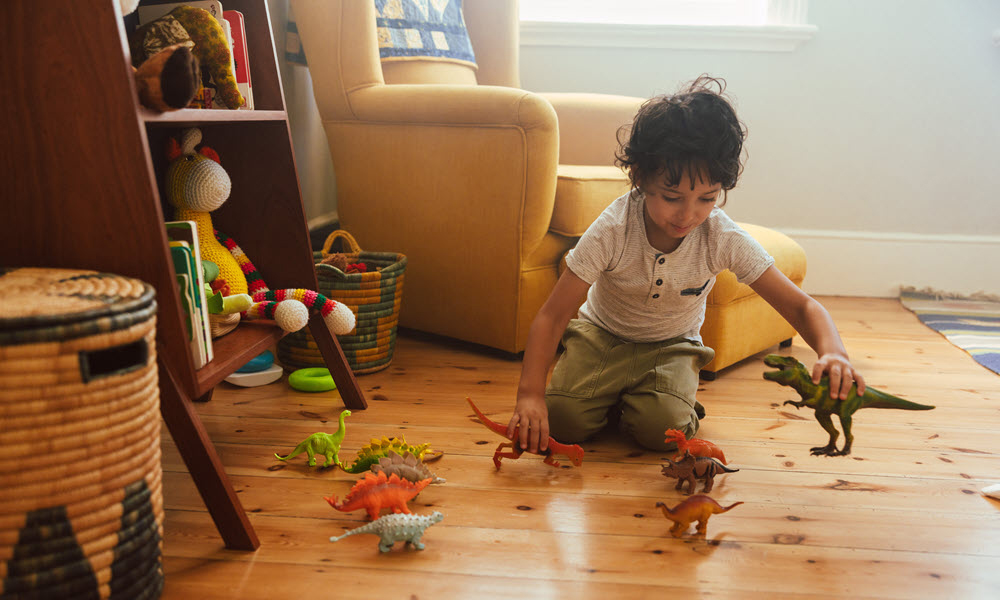
There is a reason so many adults look back fondly on childhood summers spent outside, playing pretend, building forts or riding bikes until dinner. That kind of unstructured play gave kids room to be creative, independent and active — and the spirit of that kind of summer still has value.
Some easy screen-free swaps include:
These kinds of activities don’t need to be elaborate to be meaningful. What matters most is creating space for open-ended play and connection.
If screen time feels like a constant battle at home, you are not alone. Devices are everywhere, and for many families, they are part of everyday life for good reasons. Screens can entertain, educate and help children build digital familiarity that is important in today’s world.
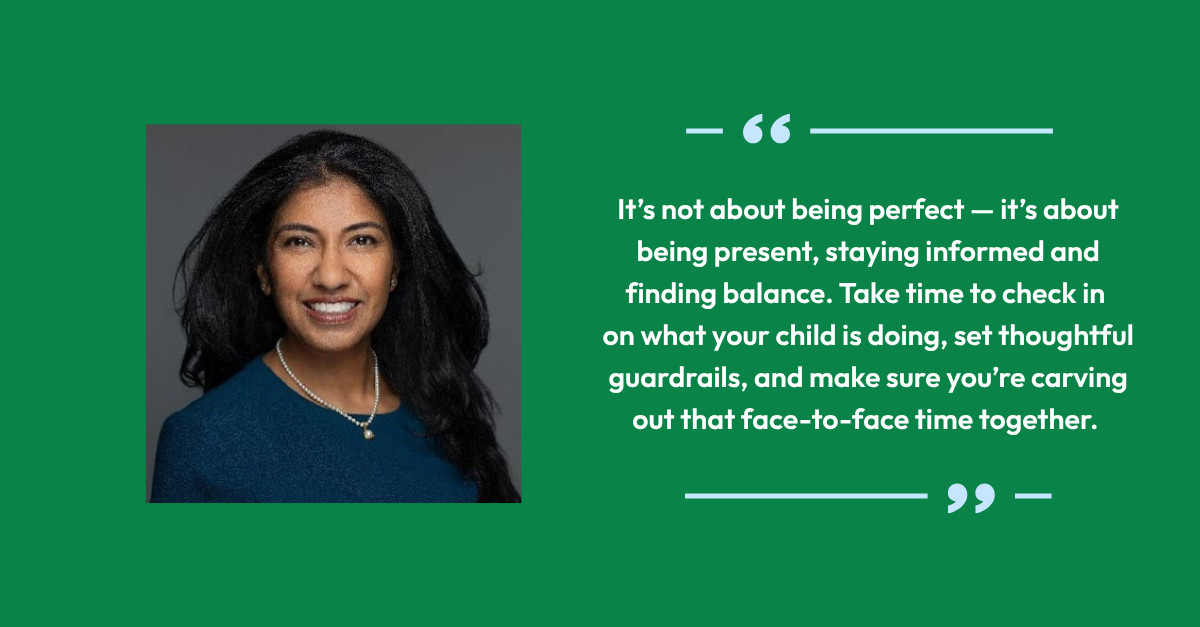
“I always remind parents that you’re already doing more than you think,” says Dr. Reddy. “It’s not about being perfect — it’s about being present, staying informed and finding balance. Take time to check in on what your child is doing, set thoughtful guardrails, and make sure you’re carving out that face-to-face time together.”
The goal is not perfection or eliminating screens entirely. It is making sure screens do not crowd out the essentials of childhood.
That is where parents can make the biggest difference — not by winning every screen-time battle, but by helping create a home environment where technology has a place but play still has priority.
 Lakshmi Reddy, MD, is a board certified family physician and is the senior medical director for Highmark Wholecare. Her passion is family-centered, high-quality care and community partnerships. She is a Pittsburgher and loves spending time with her family and dog.



Highmark Health and its subsidiaries and affiliates comprise a national blended health organization that employs more than 42,000 people and serves millions of Americans across the country.
Entire contents © Highmark Health. All Rights Reserved.
Highmark Health is an independent licensee of the Blue Cross Blue Shield Association.

 Need to find info about providers, prescriptions, coverage, claims, ID cards, or health spending or savings accounts? If so, your Highmark member site is the place to go. (It’s separate from this blog.)