

 Share This
Highmark Health recognizes that health is shaped by far more than clinical care. A person’s well-being is deeply influenced by where they live, work, learn, and connect with others. These factors, known as the social determinants of health (SDOH), form the foundation of a healthier life.
Guided by this understanding, Highmark Health has built a comprehensive social health strategy, integrating it into the very core of its operations.
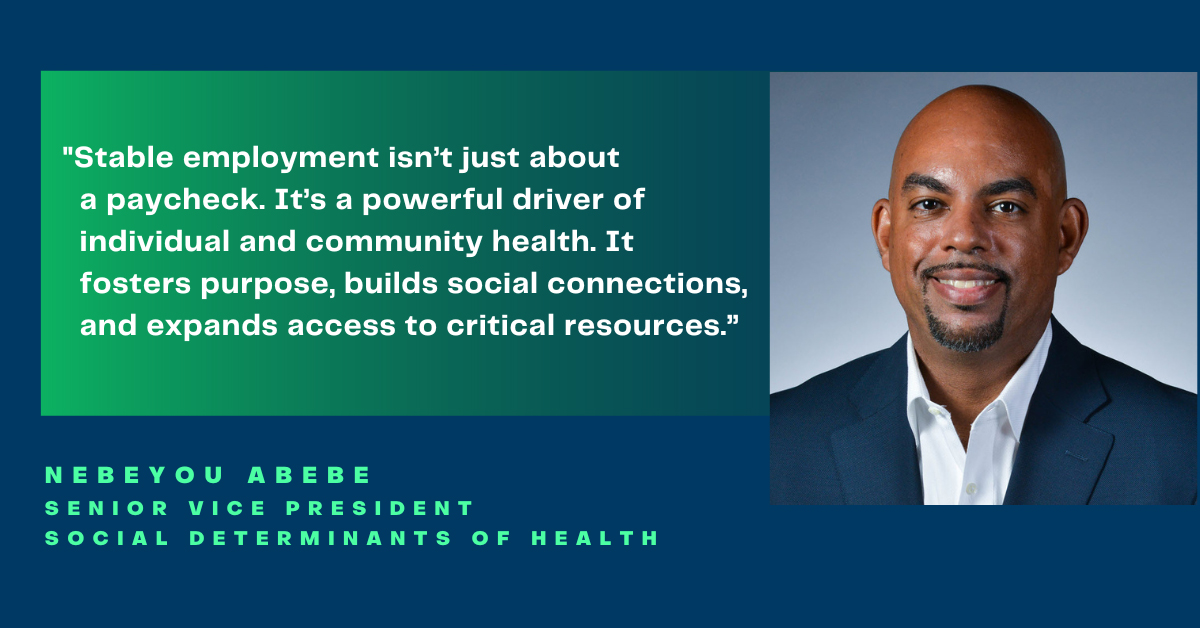
“Our social health strategy isn’t just about healthcare — it’s about investing in the holistic well-being of our members, starting with the most fundamental needs that support a healthy life,” explains Nebeyou Abebe, senior vice president of Social Determinants of Health and the Social Health Center of Excellence. “While community needs vary across our regional markets, one constant remains: Education and employment are critical drivers of quality of life.”
Highmark Health addresses barriers to health through a multifaceted approach — working across its organization and in close collaboration with partners throughout the healthcare ecosystem, including nonprofit, private and public sectors, as well as government entities. In this article we’ll explore just one facet of this work: removing obstacles and expanding opportunity related to education and employment.
The connection between education, stable employment, and overall health outcomes is clear and compelling. Education provides individuals with essential knowledge and skills, strengthening health literacy, increasing awareness of preventive care, and encouraging healthier lifestyles. It also opens doors to higher-paying jobs, improving access to health insurance and the financial means to afford care.
The long-term impact is profound: Research shows that U.S. college graduates live, on average, 11 years longer than individuals who do not complete high school — underscoring the powerful link between education, economic opportunity, and long-term health.
“Stable employment isn’t just about a paycheck,” Abebe says. “It’s a powerful driver of individual and community health. It fosters purpose, builds social connections, and expands access to critical resources like employer-sponsored insurance and wellness programs. It also enables individuals to secure essentials such as nutritious food, safe housing, and reliable transportation — key building blocks of a healthy life.”
When individuals are both educated and steadily employed, they are better positioned to navigate the healthcare system, manage their health proactively, and break cycles of poverty and poor health. These outcomes lead to stronger, more resilient communities and lasting improvements in quality of life.
Highmark Health continues to invest in targeted initiatives that remove barriers and create meaningful pathways to education and sustainable employment — an effort grounded in a deep understanding of the challenges people face every day.
That commitment begins with listening. Since launching its universal Social Determinants of Health (SDOH) assessment in 2018, more than 1.6 million health plan members have been screened, uncovering critical social and economic factors that shape health outcomes.
The findings are clear: Financial strain is a significant driver of poor health, and social factors such as income, education, and access to resources can significantly influence health outcomes. In response, Highmark Health has made addressing these root causes a central focus.
At the heart of this effort is its Social Care Network, which connects members with trusted community-based organizations (CBOs) that provide practical, targeted support. Highmark Health partners with more than 30 organizations and offers financial incentives to ensure members receive the services they need to build more stable, healthy lives.
When people screen positive for social needs, care teams connect them with in-network nonprofit partners. These services extend far beyond traditional healthcare, including financial literacy training, job readiness and placement support, adult education, vocational training, and assistance overcoming employment barriers.
The results are measurable and meaningful. Peer-reviewed findings show that participation in the Social Care Network is associated with fewer emergency department visits, improved outcomes, and an average reduction in healthcare costs of approximately $600 per member per month — demonstrating the sustained impact of coordinated, community-based care.
Currently, seven in-network CBOs provide employment and workforce services across southwestern Pennsylvania and West Virginia, including Allegheny Valley Association of Churches, Mon Valley Initiative, and Westmoreland Community Action, among others.
“In the Mon Valley, many residents face compounding barriers, from housing and food insecurity to limited transportation and educational access, that make economic mobility difficult without intentional support,” says Laura Zinski, chief executive officer, Mon Valley Initiative. “Workforce development programs like Mon Valley Initiative’s create pathways to sustainable employment and help ensure that regional economic growth reaches everyone, not just certain communities. When families achieve greater stability, local businesses gain a stronger workforce and communities become safer and more resilient.”
Mon Valley Initiative recently supported a client who had relocated from Haiti to western Pennsylvania and faced challenges finding employment. Through personalized coaching, resume development, and interview preparation, he secured two interviews within 10 days and accepted a full-time office assistant position. Leveraging his prior experience, he quickly excelled in his new role.
“I’m so happy I came to Mon Valley Initiative — they supported me at the most critical time in my life and helped me find a career and company I truly love,” he says.
In another example of CBOs in the Social Care Network having an impact, Westmoreland Food Bank helped a mother and daughter gain consistent access to nutritious food by connecting them with a local pantry and assisting them in securing SNAP benefits.
Highmark Health’s social health strategy reaches across the enterprise. For example, Highmark Wholecare, which serves Medicaid and Medicare populations, leads Gate to Success, a comprehensive cornerstone initiative designed to help individuals build a pathway to long-term economic mobility.
The program includes an online General Educational Development (GED) pathway as well as an Economic Stability program that supports participants in achieving their education and employment goals. Offered on-site, the program combines GED instruction with critical wraparound services, including free childcare for enrolled members and personalized support from a dedicated Community Health Worker (CHW) focused on educational attainment and career advancement. As the program continues to grow, partnerships with organizations such as Literacy Pittsburgh are helping expand access to resources, strengthen outcomes and create even greater opportunities for participants on their journey to success. For many participants, receiving a GED is a critical stepping stone to career advancement, financial stability, and long-term well-being, with GED graduates earning, on average, $9,000 more per year.
What distinguishes Gate to Success is its holistic, person-centered approach. Beyond academic instruction, the program recognizes that many participants are balancing school with real-world responsibilities, making additional support essential. It provides comprehensive career navigation services, with CHWs supporting members through resume preparation, interview coaching, job readiness, apprenticeships, and mentorship opportunities.
CHWs play a vital role in connecting Medicaid members to job opportunities across the organization’s payer and provider ecosystem, opening doors to careers that can offer both stability and long-term growth. The program’s impact is amplified through strong partnerships with community-based organizations (CBOs), which help prepare participants for employment and provide practical support like uniforms and ongoing career navigation. Together, these collaborations help clear the often-unseen obstacles that can stand between individuals and meaningful work.
“Our aim is to promote economic stability for our members through access to comprehensive employment and education resources that promote key components of overall health and well-being, including increased self-reliance, self-esteem, purpose, and identity,” explains Monique Reese, DNP, senior vice president of Clinical Transformation Government Business at Highmark Health.
The impact of this approach is tangible — and deeply personal. In one case, a community health worker supported a Medicaid member facing significant barriers to employment, including disability. Two months of persistent follow-up, encouragement, and connection to job placement resources paid off: The member secured a stable role, marking an important step toward financial independence and illustrating the power of individualized support.
Across Gate to Success, participants are reaching similar milestones, from landing job interviews to stepping into new roles. In another instance, a community health worker helped connect a previously incarcerated member with a job opportunity — showing how targeted, compassionate support can unlock new beginnings and help build more stable futures.

Boys & Girls Clubs of Western Pennsylvania’s Teen Connect event, sponsored by Highmark Wholecare, combined a basketball tournament with a service project benefiting unhoused neighbors.
Highmark Wholecare focuses on supporting young people as they navigate social and economic challenges already shaping their lives, including through a partnership with the Boys & Girls Clubs of Western Pennsylvania. Among other Boys & Girls Clubs programs, a Youth Advocacy Council empowers teens ages 14–18 to explore the issues shaping their communities and take meaningful action.
More than a typical youth program, the Council immerses participants in civic engagement and real-world problem solving. Teens research local challenges, collaborate on campaigns, and engage directly with community leaders — building skills in leadership, communication, and critical thinking while gaining a deeper understanding of how social factors influence health and opportunity.
The Council’s impact ranges from promoting youth civic participation to advocating for expanded mental health resources and supporting neighbors facing food insecurity. In 2025, Council members led a roundtable with county and state officials, presenting solutions to issues like hunger, violence prevention, and access to out-of-school programming. In 2026, council members participated in a roundtable discussion with Pennsylvania Governor Josh Shapiro to share input on safety surrounding the use of artificial intelligence.

Boys & Girls Clubs of Western Pennsylvania Youth Advocacy Council members participated in a roundtable discussion on safety and artificial intelligence with Pennsylvania Governor Josh Shapiro at the organization’s Carnegie Clubhouse.
“For over 138 years, Boys & Girls Clubs of Western Pennsylvania has been providing young people with quality programs that help them reach their fullest potential,” says Christopher Watts, president and CEO, Boys & Girls Clubs of Western Pennsylvania. “Through our partnership with Highmark Wholecare, we have unlocked access to academic enrichment, social and emotional support, and career readiness programs that prepare Club Kids for success in the classroom, in their future workplaces, and in life."
Since 2019, Highmark Wholecare has also supported 3,700 monthly memberships that provide access to summer camp, STEAM and CareerWorks programming across 11 Boys & Girls Clubs locations in southwestern Pennsylvania. By covering membership and transportation costs, Highmark Wholecare helps remove barriers that can stand in the way of participation, ensuring more youth learn, grow and thrive.
Longer term, this early investment pays off by helping shape a generation of informed, engaged leaders ready to build healthier, stronger communities.
Expanding access to education and meaningful employment isn’t just a strategy for improving health — it’s a catalyst for unlocking potential. At Highmark Health, this work is about more than addressing gaps; it’s about creating momentum that helps people move forward with confidence and possibility.
“Opportunity is one of the most powerful drivers of health,” says Abebe. “When individuals have the tools to learn, grow, and support themselves, it changes not just their outcomes, but their trajectory.”
That belief is shaping a broader vision at Highmark Health — one where care extends beyond treatment and into the fabric of everyday life.
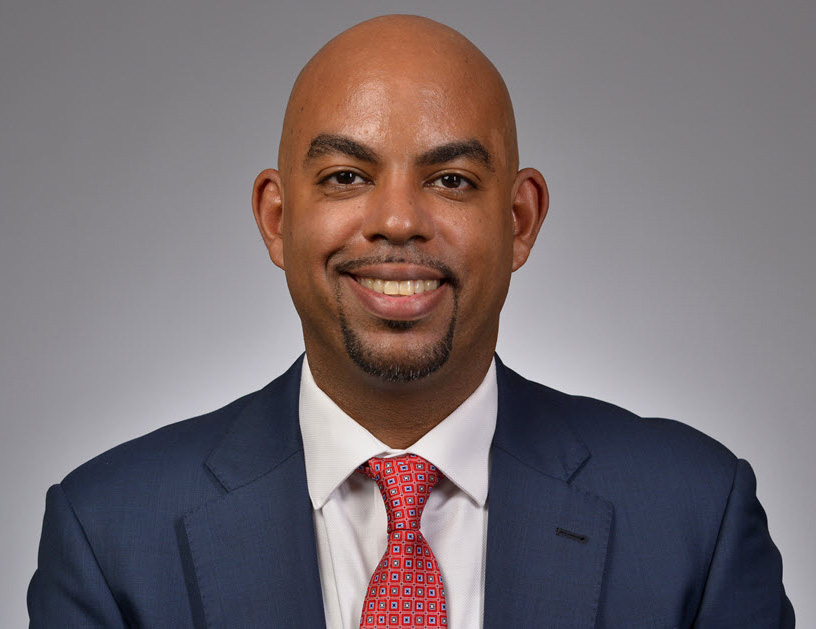 Nebeyou Abebe is the senior vice president of social determinants of health for Highmark Health, a $32.4 billion national, blended health organization that includes one of America’s largest Blue Cross Blue Shield insurers and a growing regional hospital and physician network. Based in Pittsburgh, Pa., Highmark Health’s 47,000 employees serve millions of customers nationwide through the nonprofit organization’s affiliated businesses, including Highmark Inc., Allegheny Health Network, HM Insurance Group, United Concordia Dental, enGen, and Helion.
Social determinants of health are the conditions in which people live, work, learn, and play that can impact up to 80% of an individual’s health outcomes before the health care system can intervene. Mr. Abebe brings nearly 20 years of experience leading social determinants of health, population health, and employee health and well-being initiatives for public and private sector organizations.
In his role at Highmark Health, Mr. Abebe leads a team that spans across the enterprise and forges close ties with the communities in Pennsylvania, West Virginia, Delaware, and New York, uncovering non-clinical opportunities to improve the health and well-being of people the organization serves.
Before joining Highmark Health, Mr. Abebe served as global VP of health and well-being for Sodexo Group, where he guided social determinants of health, population health and employee wellness for all Sodexo business segments, impacting more than 425,000 employees and 100 million consumers. While at Sodexo Group, Mr. Abebe developed initiatives that addressed food insecurity, housing, transportation and workforce development in partnership with community-based organizations.
Prior to joining the Sodexo Group in 2013, Mr. Abebe served as associate director of health systems for the Louisiana Public Health Institute, where he played a leading role in building and strengthening local health IT infrastructure and testing innovative approaches to make measurable improvements in health, patient care and cost. He has also served in health communications and social marketing positions, including directing a national CDC campaign to reduce the stigma associated with HIV/AIDS.
Mr. Abebe earned his bachelor’s in economics from the University of Massachusetts-Amherst and his master’s in social and public policy from Georgetown University, as well as his Project Management Professional credential from the Project Management Institute.
Read more articles about social determinants of health efforts across the enterprise on Highmark Health’s Digital Magazine.


Highmark Health and its subsidiaries and affiliates comprise a national blended health organization that employs more than 42,000 people and serves millions of Americans across the country.
Entire contents © Highmark Health. All Rights Reserved.
Highmark Health is an independent licensee of the Blue Cross Blue Shield Association.

 Need to find info about providers, prescriptions, coverage, claims, ID cards, or health spending or savings accounts? If so, your Highmark member site is the place to go. (It’s separate from this blog.)