

 Share This
In each Veteran Voices article, we invite employees who served in the military to share insights and experiences from their time in the military, their transition to civilian careers, and their current work at Highmark Health, in their communities, and helping other veterans.
Raised in a world where masculinity was synonymous with physical strength and grit, Greg Barnes envisioned a life rescuing others as a member of the United States (U.S.) Air Force. His longtime career in computer operations and technology revealed a broader definition of masculinity, one where a man could be anything he chose to be.
In this interview, I sat down with Greg Barnes to learn more about his career in the Air Force and how he leverages that experience now as chief information security officer (CISO) at Highmark Health.
Emily Mashore: Let’s start with what drew you to the military. How did you decide on the U.S. Air Force?
Greg Barnes: My dream was to be part of the U.S. Air Force Pararescue team, dropping in during the worst kinds of circumstances to rescue war fighters. My father, whom I always considered a man’s man, my mother, a nurse, and my grandfather, a World War II veteran who fought in the battle of Peleliu, were significant figures in my life, and I wanted to be the best of what I thought each of them were. For me, that meant being a pararescueman.
I was physically in peak condition, an athlete, and well-educated on gun use, so I thought this would be the perfect role. My recruiter asked me to take the Air Force Electronic Data Processing Test (EDPT), and when I took it, I did well. Unfortunately, the Air Force didn’t even want to give me a chance to be a pararescueman — they needed computer guys. And that’s what they made me.
Emily Mashore: So, although you were proficient in this type of work, you didn’t want to do it at first?
Greg Barnes: No way. I admit that I was a bit young and naïve. The kinds of men that I wanted to be around were outside and always in the action. Their jobs didn’t involve coding algorithms or computers. It was never something I wanted to do. I spent the first three years of my career hating my job, not making friends with the people I worked with, because I had this idea of what I thought a man was, and none of these men that I worked with qualified. With time, I gained a new appreciation for the unexpected direction my career had taken, and for the people I was working with.
Emily Mashore: Was there a specific moment during your time in the Air Force that made you shift your perspective?
Greg Barnes: Three years into my role — I was twenty-two or twenty-three — in a distant country where we were in conflict; I found myself alone in a muddy foxhole in the middle of winter. I was thinking about being away from my pregnant wife and my first son on the way. I was reflecting on my last three miserable assignments — all different jobs, locations and supervisors — I realized the only constant in that experience was me.
That misery I was experiencing was entirely a consequence of my attitude. I was blessed to have had a moment of misery so early in my life, out of which came some clarity. That night, I made up my mind that I wasn’t going to let my attitude get in the way of anything anymore. I wouldn’t be just “good enough” to not get fired from the Air Force — I was going to be great at it.
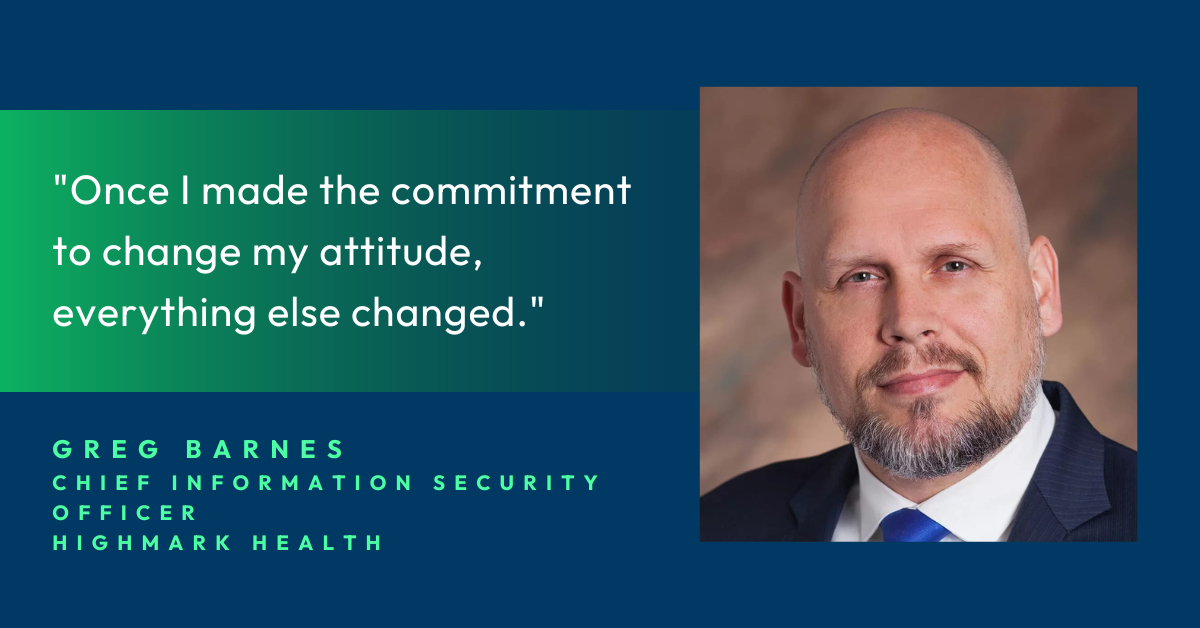
Once I made the commitment to change my attitude, everything else changed. I started getting choice assignments, loving my supervisors, and making great relationships at work. My strong performance led to being sought out for challenging new roles by senior leaders at every installation.
It all culminated when I went to Airman Leadership School and earned a John Levitow Award.
Emily Mashore: Tell me more about your role in the Air Force. What did it entail?

Greg Barnes: I worked in communications computer systems operations. In the early 90s, the military was still figuring out what it meant to have computer experts. During this time there was a strategic shift in the Department of Defense’s global strategy to prosecute warfare, moving from a single-front approach to the ability to fight multiple, simultaneous wars. The Air Force implemented a “one base, one boss” model, structuring each Air Force installation as one wing of multiple groups led by one general. They moved away from centralized command.
What that effectively meant was every time I moved, each wing commander had a different idea of what computer experts should be doing. I worked on switch boards, telecommunications, UNIX and Windows system administration, intelligence systems management, cyber, and more. I had this whirlwind tour of every kind of technology during my nine years in the Air Force.
Emily Mashore: You acquired this broad skillset in the Air Force that could have taken you to many different industries. Why health care?
Greg Barnes: The first Congressional Medal of Honor winner that I ever met, was a man by the name of Roy Benavidez. Shortly after I had that attitude change, I was sitting up front at a theater hall and listening to his story firsthand. His attitude was inspirational. It was exactly the kind of personal attitude I wanted to exemplify — he was a hero. I followed his life and career thereafter until he died in 1998 from diabetes complications. What struck me as incredibly ironic is here’s a man who fought off all adversarial odds, saved lives, recovered from multiple career-ending and life-threatening violent injuries, and then he ultimately dies from a preventable disease. So that’s why I love working in health care.
Melissa Anderson, chief risk, audit and compliance officer — and my now boss — was the number one influence for me to join Highmark Health. When I met her, she was so forthcoming and honest, disarmingly so, and she made it clear that she needed several things done. I felt uniquely equipped and interested to contribute to her team’s success.
Emily Mashore: You now have the best of both worlds where you’re working in the computer space but also supporting patients and members directly. Can you share how the skills you acquired during your time in the service transferred over to your current role as CISO?
Greg Barnes: All the technical skills I gained during my nine years in the Air Force are critical to my role today, but I also learned a ton at Airman Leadership School about what it truly means to be a leader. There are many misconceptions in the civilian workforce about what the military is and isn’t.
You must be able to think on your feet. Yes, you will get commands and constraints, but those people will not be in the field and on the ground with you, so you’re going to have to adapt. Members of the military know to be creatively audacious to complete a mission and take care of their people. Sometimes this means violating preconceived ideas or even not directly following orders, and that to me was one of the biggest lessons that I carry forward.
Emily Mashore: Part of your role is to prevent cybersecurity threats. How do you educate others at Highmark Health and beyond?

Greg Barnes: I spend lots of time mentoring employees internally. I also host CISO Coffee Chats for Highmark Health employees, during which I talk security, privacy and online safety. Externally, I’m on the Health-ISAC (Information Sharing and Analysis Center) board, where we share information across the health care sector to prevent, detect and respond to cybersecurity events.
I’ve also written papers on how organizations and people can protect themselves against particular dimensions of threats, including the Health Industry Cybersecurity Protection of Innovation Capital.
Emily Mashore: What advice do you have for veterans and leaders of veterans that are adjusting to civilian life after being in the service?
Greg Barnes: The advice I’d share with veterans is to flex what you learned in the military, but don’t make it your entire personality. You have acquired many skills from your time in the service and it’s important to showcase those skills in your career, but it’s good to embrace being a civilian too.
And for leaders of veterans, odds are that you have a diamond. Cultivate it and these people will go to the wall for you, in extremely positive and impactful ways.
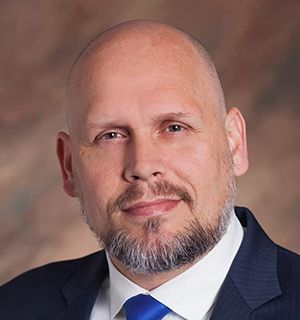 Greg Barnes is a U.S. Air Force veteran and a business technology executive. Through his leadership, he’s implemented a broad spectrum of technology and information protection program strategies for multiple Fortune 500 companies, including but not limited to: Amgen, Blue Cross and Blue Shield, Exxon Mobil, Washington Mutual, Union Pacific, Wal-Mart, MCI, Williams Communications Group, State Farm and others.
While serving in the Air Force, Barnes implemented and managed classified command, control, communications, intelligence and cyber operations systems. He managed the first network security monitoring technologies ever deployed by the Department of Defense.
He is a John L. Levitow leadership award winner, former Advisor to the Blue Cross Blue Shield Association Board, and currently vice chair of the Healthcare Information Sharing and Analysis Center (Health ISAC) Board of Directors.
He holds a B.S. in Information Technology, and a M.S. in Information Assurance from the NSA designated center of academic excellence in Cyber Operations at Northeastern University. Barnes maintained the CISSP & CISA designations for over 20 years, is a published author, technical editor and patent holder.



Highmark Health and its subsidiaries and affiliates comprise a national blended health organization that employs more than 42,000 people and serves millions of Americans across the country.
Entire contents © Highmark Health. All Rights Reserved.
Highmark Health is an independent licensee of the Blue Cross Blue Shield Association.

 Need to find info about providers, prescriptions, coverage, claims, ID cards, or health spending or savings accounts? If so, your Highmark member site is the place to go. (It’s separate from this blog.)