

 Share This
Virtual care is a key part of Highmark's Living Health strategy, which integrates health, coverage and care to deliver a simpler, more personalized, and proactive health experience for individuals and clinicians. Highmark is committed to providing its health plan members with convenient, high-quality health care wherever they choose to seek care.
Highmark exemplifies this commitment by offering personalized musculoskeletal care from home with Virtual Joint Health, Thrive by Sword. Whether experiencing acute pain, chronic discomfort, or a desire to improve mobility, Virtual Joint Health is available to eligible members 13 or older experiencing pain in their back, shoulder, hip, knee, ankle, neck, or elbow.
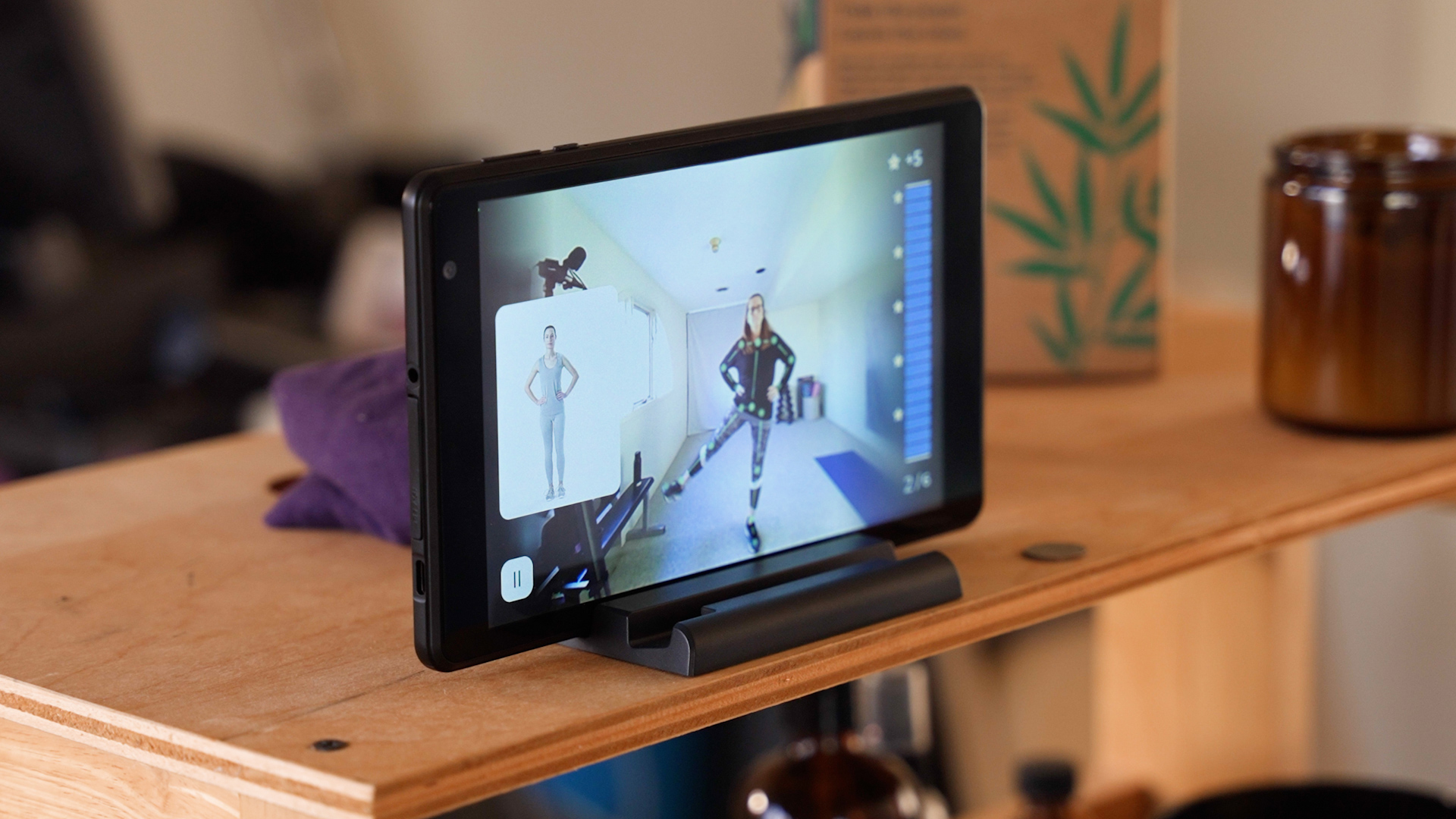
The program uses a tablet with advanced computer vision technology to guide members through customized exercises, providing real-time feedback to ensure proper form and maximize effectiveness. Whether recovering from surgery, managing chronic pain, or aiming for prevention, this tailored approach helps members heal and strengthen.
"To experience improvement and long-term relief, most musculoskeletal patients need to attend physical care appointments two to three times a week for at least six to eight weeks," said Anil Singh, MD, SVP, Population and Curated Health, Highmark Health in a press release. "It's a significant commitment, so Virtual Joint Health allows members to complete their exercises wherever is most convenient for them and eliminates common barriers to compliance. We're seeing overwhelmingly positive results, and we believe that's driven by the ease of access."
The effectiveness of the Virtual Joint Health program is best illustrated by the experience of Highmark’s members (more below and in the sidebar). See how one member reclaimed her life from debilitating pain in the video below.
Kathy Kennedy-Ratajack: Hi, my name is Kathy Kennedy-Ratajack, and I'm 59 years old. I currently work for Wilmington University. I'm an assistant vice president of Academic Affairs, and I've also spent my life, 40 years, being a fitness instructor. So I'm a certified personal trainer, and enjoy working with individuals both in the academic arena, as well as in the health and wellness arena.
He's always got to be in my Zoom calls, too, when I'm working here. I currently, have had issues with my right knee. It started about a year and a half ago. I'm very active physically, and I like to walk. I like to do all kind of exercising, and I was on a hiking trip in Iceland, and I think I just overworked it and ended up tearing my meniscus. This injury really stopped my normal way of life, honestly. I was walking every day. I was doing my fitness instruction two times a week. I was very, very active and it really stopped me. I wasn't able to walk as normally as I would, and when I did walk, I was in pain. So, it really did interfere with my normal way of life.
At first, I tried physical therapy, working with my doctor and a physical therapist, and I also received a letter in the mail, and it was just at random. I looked at it, I read it, and I thought, you know what? This might be for me. So I used the tablet from Sword to really help me do these exercises on a regular basis. The exercises were demonstrated via the tablet, and then I was able to align my body properly using the tablet to help me, um, ensure that I was doing the exercises properly. So that alignment really made me aware of how I was doing the exercises and whether I was doing them correctly or incorrectly.
I found Sword extremely easy to build into my schedule. So I loved the opportunity where I could just choose when to use the equipment and to do the exercises. It just gave me a lot of flexibility, especially with my busy work schedule.
Kathy Kennedy-Ratajack, DBA, assistant vice president of Academic Affairs and Partnerships at Wilmington University and a fitness instructor in Kent County, Delaware, knows firsthand the demands of a busy schedule. When a torn meniscus — sustained during a rigorous fitness class and exacerbated by a hiking trip in Iceland — threatened her active lifestyle, she initially sought traditional physical therapy. However, fitting in-person sessions into her schedule proved challenging.
From the start, Kathy found Virtual Joint Health easy to integrate into her life. Her virtual physical care specialist customized her exercises, and even accommodated her travel schedule with flexible, text-based consultations. After six months of using the computer vision technology and completing her customized program, Kathy experienced significant pain reduction, enabling her to resume her yoga and fitness classes, long walks with her dog, and an active life — all without cortisone injections, painkillers, or surgery.
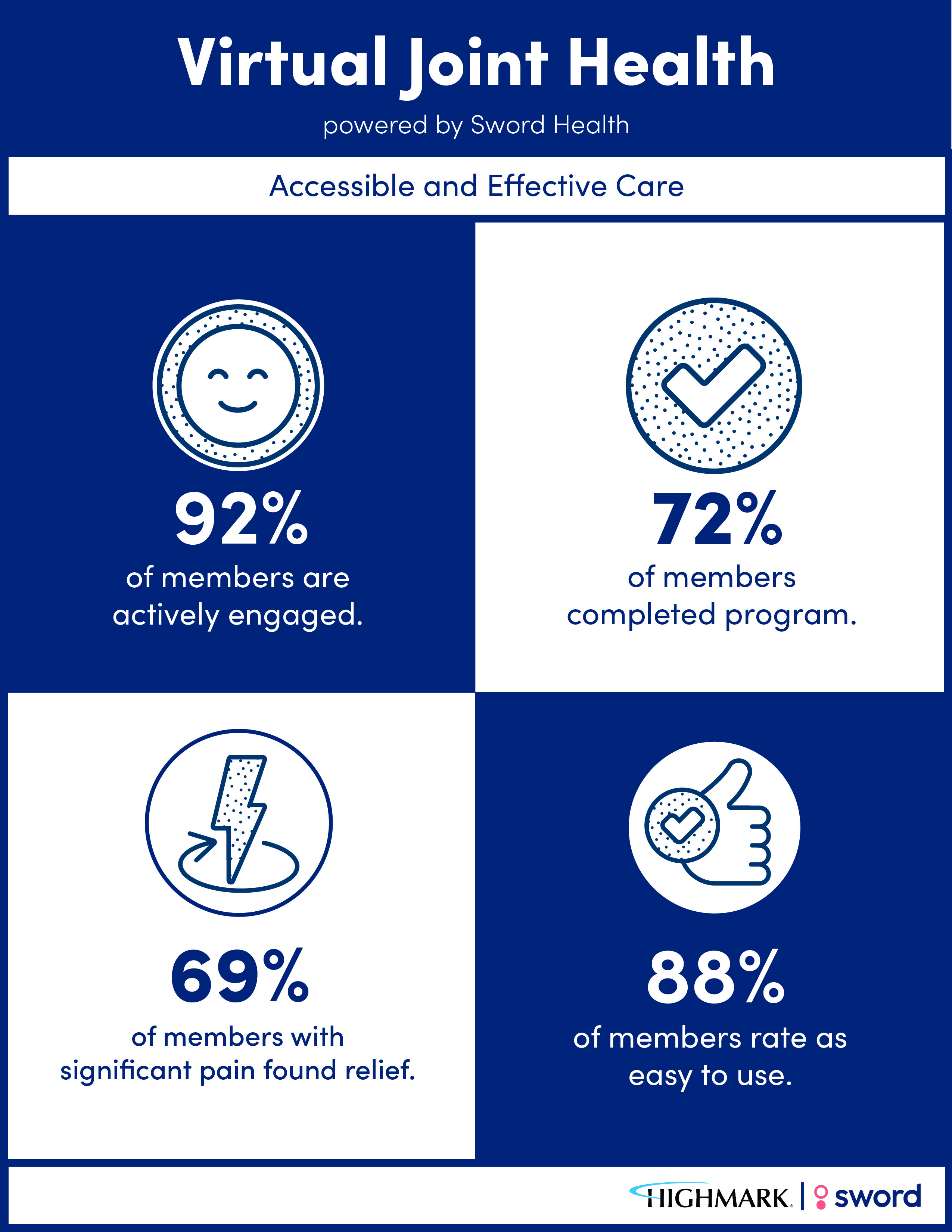
These positive member experiences are backed by data. By the end of 2024, over 36,000 Highmark members enrolled in Virtual Joint Health. High member engagement (92%) and a 72% completion rate demonstrate the program's effectiveness and ease of use. Most importantly, for those suffering from moderate to severe pain, 69% found relief.
Compared to non-participants, Virtual Joint Health users showed a statistically significant reduction in emergency department visits, hospital admissions, and the need for imaging, surgery, and joint replacements. This benefits both members and the long-term sustainability of the health care system.
Virtual Joint Health is one example of Highmark’s Living Health strategy in action. Highmark continually expands and refines its virtual care offerings based on data and member feedback, furthering its mission to create a remarkable health experience.
Highmark is extending care beyond traditional clinical settings and making it easier to engage in health with virtual care offerings across primary care, urgent care, mental behavioral health, and other specialties through its My Highmark app and web-based member platform.
“At Highmark Health, our Living Health strategy is about providing a remarkable health experience to our members,” shared Karen Hanlon, EVP, chief operating officer, Highmark Health in a press release. “To do that, it's our responsibility to make it easier for members to find and access the care they need.”



Highmark Health and its subsidiaries and affiliates comprise a national blended health organization that employs more than 42,000 people and serves millions of Americans across the country.
Entire contents © Highmark Health. All Rights Reserved.
Highmark Health is an independent licensee of the Blue Cross Blue Shield Association.

 Need to find info about providers, prescriptions, coverage, claims, ID cards, or health spending or savings accounts? If so, your Highmark member site is the place to go. (It’s separate from this blog.)