

 Share This
Across the country, rural healthcare is under increasing pressure. In the last 15 years, more than 150 rural hospitals have closed or stopped providing inpatient services. Those that remain are often operating on thin or negative margins or with limited staff. For millions of Americans, that strain is making it harder to access the healthcare resources they need, especially in times of crisis or immediate need.
For individuals and families living in rural communities, access challenges like transportation can lead to delayed diagnoses and costly, advanced conditions. For the physicians and clinical teams serving these areas, resources are limited and the stakes are high.
Because of this, new models of care for rural communities are beginning to take shape. These new models are built on close relationships, technological innovation and a commitment to meeting patients where they are.
For Dr. Timothy Law, a family medicine physician in Kentucky and chief medical officer (CMO) at Highmark, these realities are part of his daily work, and the driving force behind his vision for the future of rural healthcare.
In rural Kentucky, Dr. Law cares for Amish and Mennonite communities whose approach to healthcare is shaped as much by culture as it is by access.
Many primarily rely on home remedies and trusted local pharmacists rather than seeing a physician. Combined with the realities of rural life — long distances, limited transportation and fewer specialists — accessing care can become a journey measured not just in miles, but in time, cost and missed opportunities for early intervention.
In our first video, Dr. Law points out that a rural, community-driven lifestyle has strengths as well as unique challenges. To be effective, he says that the approach to care must be relationship-based, open-minded and flexible.
Dr. Tim Law: Whenever I decided to come into this part of the industry and make a difference for a larger amount of population at one time, I couldn’t leave that part alone because I felt like I was leaving them in the lurch with no options. You know, there are something like 6,000 community rural clinics in the country serving 66 million people from only about 2,000 hospitals in those areas. If you divide that up, that’s only three doctors per hospital, and this community of two to three thousand Amish, Mennonite, and plain community patients had nowhere else to go. That’s not going to change anytime soon, but what can change is getting doctors, nurses, healthcare professionals, and companies to notice that they are there.
The industry is finally recognizing that this population exists — 66 million people is not a small piece of our 350 million citizens in the United States. The difference is that while they used to be completely isolated and never interact with the health system, now they are not as isolated as they used to be. Yet, if you look at the same disease processes, several studies have shown that when a disease is treated in a rural community, there is about a 24% higher mortality rate.
Good or bad, the industry is worried about the healthcare dollar. We are trying to figure out the best way to spend and where each dollar should go. These rural communities are now accessing healthcare, but they do so much later in the process — even later than those who live in the cities. Because they present so late, their diseases are already far advanced, making it much more expensive to care for them.
The reason health insurance and other industry players are trying to enter these spaces is preventive: we can prevent a condition from escalating. The cost of taking care of something early on is X, instead of making it X times five later. This is why start-up companies are trying to help health systems expand their coverage, and why the payer side of the industry wants to ensure early intervention.
I always show something to my medical students: they talk about “underserved” populations, but so often they remove the “r” from that word, treating it almost as “undeserved.” It’s like saying, ‘If you want care, come and get it, I’m right here.’ But that’s not giving care to everybody; that’s just staying in your bubble. I’m glad that communities, insurance companies, and health systems are finally getting out of their bubbles and realizing there are other patients out there.
I got called by a driver for the Amish who said someone was in labor and needed help right away. It was back when Michael Jordan was playing with a high fever in the NBA finals. They came and picked me up — I just remember missing the end of the game! I got there, and there I was in the middle of nowhere, with no supplies because I wasn’t at home when I got called. I had to deliver a baby from a woman basically in the middle of the woods with no doctor tools of any kind. We got through it, but I remember sitting there waiting between contractions, thinking: what would have happened if I wasn’t available?
Delivering babies for this community often involves little to no prenatal care. I sent this particular patient for an ultrasound because she seemed large for dates. The physician only charged us $50 and said she was having twins. A couple of months later, I got called at 4:00 AM. I got there, delivered one baby, delivered another baby, and as I was drying the second baby off, the husband looked over and said, ‘Doctor, I think something’s wrong over here.’ I went back over and realized: there’s another baby! I delivered a third baby. On the way home, I called the OB doc and said, ‘Hey, there were three, not two.’ He replied, ‘Well, what do you want for 50 bucks?’ I said, ‘I don’t know, charge me 25 bucks a head next time, I’ll give you 75, just finish the job!’
It just shows that you have to be like MacGyver when you get out into these rural communities. You never know what you’re going to step into. You walk in thinking it’s a high-pressure situation to deliver twins, and then find out it’s triplets — 18 total pounds of baby delivered in a 30-minute span. You have to be ready for anything. To them, it’s just another day in the life.
In our second video, Dr. Law shares the importance of meeting patients where they are by understanding their individual needs, preferences and position. In some communities, telehealth and digital tools may not align with cultural norms or comfort levels. Others are willing to travel long distances for in-person care, often turning a visit to the doctor into a full-day commitment. Effective rural healthcare, Dr. Law says, begins with respecting those differences and modifying treatment plans accordingly.
Dr. Tim Law: You wouldn’t see a lot of mask-wearing going on during COVID in rural communities like you did in the cities. There’s less exposure and fewer people, which I understand. But there was also a bit less trust. That has shifted now; people in rural communities are thinking differently than they did 10, 20, or 30 years ago. They want the same quality of care, they know they deserve it, and they are now demanding that access.
In the city, if you need care, you just go get it. There’s less structural urgency. If I’m sick with a fever in the morning, I can probably push through work at home and go to the doctor tomorrow. But if you wake up in the middle of nowhere and your kid has a 105-degree temperature and is shaking, you can’t just ‘give it a college try’ or run to the corner store for anti-fever medicine. You have to take advantage of daylight, travel times, and the time factor to get things taken care of immediately.
I’ve seen this shift even among my Amish and plain communities. They are much more apt to call me now as soon as a kid has a cough, whereas ten years ago they might have called and said, ‘My two-month-old has been coughing for six weeks.’ Well, they’ve only been alive for eight weeks, so what’s been going on? Now they call right away. Despite the distrust in the system following the pandemic and vaccine controversies, there is ultimately more trust in local options and a greater willingness not to wait so long.
Let me give you an example. We had a period with a lot of unusual skin infections and cases of sepsis — infections that get into the blood. To treat them, patients had to be hospitalized on IV antibiotics. We would call the infectious disease specialist in the next city, which was 75 to 80 miles away, and send them there.
We had the great idea, in partnership with the University of Louisville, to have an infectious disease doctor visit our community once a month to handle these problems in person. The first time we did it, nobody showed up. I started asking my patients, ‘What happened? The specialist was here.’ They replied, ‘Oh, well, we actually like to drive to the city every once in a while. It’s a chance for us to see what’s going on outside of our community.’
Nobody had actually asked them, ‘Is traveling to the city a problem for you?’ I was worried about them paying a driver by the mile, when in fact they didn’t mind making that trip once a quarter for follow-ups. The point is, you have to meet people where they are. What are their true needs? Don’t dictate what they need; find out, and then serve that.
In a Baptist religion — which includes the Amish, Mennonites, and other plain communities—there are gradations just like in any other group. Some super-conservative communities won’t even get on a phone. They will have a neighbor call for them, standing in the yard telling the neighbor what to say to me, but they won’t touch the phone themselves. Others keep a single phone in the barn for the whole community to share, charging it at an ‘English’ house during the week.
You have to know which community you are dealing with. Some won’t use medications until you’ve built a strong rapport. You can’t just walk in and say, ‘You must use this antibiotic, it’s the only thing that will work.’ You have to go in with an open mind. If they won’t use a specific drug, let’s find another way to treat the disease. Or better yet, let’s find out why they keep getting the infection and prevent it entirely so they don’t need antibiotics in the first place.
Long before telehealth became a common term in healthcare, Dr. Law was using remote technology to connect with patients while serving in the military. In our third video, he reflects on how innovations like telehealth and community-based care models are helping address one of rural healthcare's greatest challenges: distance. When used thoughtfully, he says, technology can connect patients to care that might otherwise be hours away, improving access while preserving the personal relationships that remain crucial to rural medicine.
Dr. Law also highlights the growing role of community pharmacists, who have become trusted extensions of the healthcare team. In many rural communities, pharmacists are among the most accessible healthcare professionals, helping patients manage chronic conditions, navigate medications and address concerns before they become more serious health issues.
That philosophy is at the heart of EngageRx, a program designed to connect patients with support beyond the doctor’s office. Through a trusted relationship with the Pennsylvania Pharmacists Care Network (PPCN), Highmark Wholecare empowers community pharmacists in rural areas to address health-related social needs, support medication adherence and help members manage chronic conditions while also reimbursing them for that care.
Dr. Tim Law: As many patients as there are, there are just as many ways to see them. I’m so glad we’ve moved past the assumption that you can’t use technology in rural areas. I’ve been doing telemedicine for about 30 years, starting in the military where we did it constantly. If I needed a neurologist at a base in North Carolina while I was at Fort Knox, Kentucky, we would get them on video. I would act as their hands, eyes, and ears in the room, performing the neurological exam while they watched and diagnosed.
When I left the military, I realized nobody in the civilian sector was doing this. The closest neurologist was in Nashville or Erie. My patients had no running water, no electricity, and most had no personal phones — perhaps a community phone, and certainly not a smartphone.
To solve this, I planted Bluetooth-based technology—stethoscopes, otoscopes, ophthalmoscopes, and dermoscopes — in various homes near their communities, often with retired nurses or the drivers who know them well. When someone calls me with a problem while I’m traveling, I can say, ‘Take them over to so-and-so’s house. I’ll have them point the camera in your child’s mouth or ear, and I’ll look at it from here.’ I can decide if it can wait, if I can call in a prescription, or if they need to go to the emergency room.
I traveled from Beijing to Belgium giving talks on telemedicine and technology in the decade leading up to COVID. People used to pat me on the head like a puppy and say, ‘That’s cute, but it’ll never be needed. Patients want to see the doctor in person.’ Then COVID hit, and I was getting calls from five continents asking about the technology. I told them, ‘I don’t just used to use it — I use it daily.’ Even a rural population that uses no technology in their daily lives completely accepts telemedicine because they understand the hard limitations of geography.
The role of the pharmacist has evolved 180 degrees. Working in a rural community, I’m the kind of doctor who will get a text message from a local pharmacist about a patient standing at the counter waiting for a refill. That simply doesn’t happen in the city.
We once designed a program for a company where we mail-ordered medications to rural patients three months at a time to save them time and money. But we couldn’t get elderly patients to adopt it. After months of failure, we interviewed them. They told us, ‘We like going to the pharmacy. I can pick up some milk and bread, I see John the pharmacist, I see Charlie, I meet my neighbor. It’s an event for the day.’
Once again, we tried to dictate a solution to a problem that didn’t exist. This realized failure led the industry to rethink things. In Pennsylvania, we have the Engage program, which is the longest-running and strongest of its kind. We realized we weren’t utilizing the healthcare assets already trusted and embedded in these communities.
People have deep relationships with their pharmacists, technicians, and front-counter staff. Why not utilize that trust to gather information that helps us deliver better care? Through this program, we can collect social determinants of health (SDOH) data, help manage medications, ensure adherence, and prevent dangerous drug interactions. It has completely transformed how the medical community views pharmacists.
A physician might see a patient with a chronic illness once or twice a year if they’re lucky. But who sees them every single month? The pharmacist. The pharmacy is the ultimate stop-gap for critical patient information.
The EngageRx program captures vital data on what other medicines patients are taking, their home situations, and other social determinants of health. This data is integrated into our databases, allowing us to identify broader trends. For example, we might discover an overlooked community of diabetics who need targeted education. By partnering with pharmacies, we can use this data to guide our community health programs. It’s all about maximizing community health and patient experience, which aligns perfectly with the Highmark Living Health model—being free to live your best life.
In our fourth and final video, Dr. Law shares how Highmark Health's Living Health strategy helps to reimagine the healthcare experience by bringing together treatment, coverage and support around the needs of the individual.
He also discusses how innovations such as ambient AI can reduce complexity, giving clinicians more time to focus on patient care while making it easier for patients to navigate the system.
Dr. Tim Law: Highmark’s Living Health strategy is about giving people the freedom to live their healthiest lives, moving away from purely episodic care to focusing on the care between episodes. The work we do in rural communities fits this model perfectly. We are serving the underserved and giving them access, while using programs like EngageRx to gather data that informs our population health solutions. It helps people integrate the Living Health mentality into their everyday lives.
At Highmark, we are partnering with companies that use AI to bridge the gap between clinical sessions. Instead of episodic care where you see a doctor in January and then not again until June, AI helps maintain continuous care in between — tracking labs, facilitating touchpoints, and keeping the patient engaged. Crucially, we always keep a human at the helm. AI does not drive the care or make final clinical determinations; rather, it delivers synthesized information to help clinicians make faster, better-informed decisions.
Highmark is leading the industry. We were the first to cover digital therapeutics three years ago, and we participate in the FDA’s early payer development program, evaluating cutting-edge technologies before they reach the public. We are digitizing medical records ahead of our peers, using AI in our gold-carding program to identify high-performing doctors, and leading the nation in these initiatives.
As we enlist pharmacists and community health workers, AI will be the connective tissue. The final frontier is combining these trusted local faces with AI-driven coordination. When we do that, “rural healthcare” will cease to be a separate, problematic category. It will just be healthcare. It shouldn’t matter whether you live on Fifth Avenue in Pittsburgh or outside of Grove City — everyone deserves the same high standard of care.
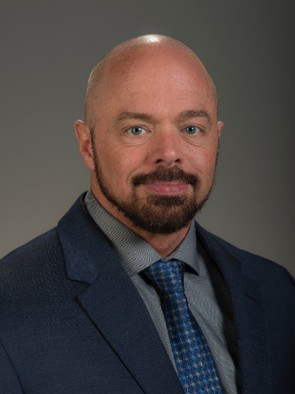 Timothy Law, DO is chief medical officer and senior vice president of integrative care delivery at Highmark.
In this role, Dr. Law leads enterprise efforts to transform utilization management and advance Living Health through strategic collaboration across population health, clinical quality, and value-based reimbursement initiatives, including the True Performance strategy. His portfolio also includes oversight of prior authorization optimization, gold carding programs, the federal employee program, and enterprise clinical integration initiatives.
He began his tenure at Highmark on the medical policy team, where he advanced evidence-based coverage policies to expand access to emerging technologies for members and strategic partners. He now oversees the medical policy function within clinical services and serves as chair of the care management and quality committee.
Dr. Law was the virtual health lead on Highmark’s COVID-19 command center team and led the group in the organization of adding over 1000 codes for inclusion in the coverage policy during the pandemic, helping to bring virtual care to patients.
A board-certified physician with two decades of clinical experience, Dr. Law serves as the medical director and principle investigator of the Ohio Musculoskeletal and Neurological Institute (OMNI) at Ohio University with millions of dollars in NIH grant funded research in healthy aging and wellness.
In addition to his executive leadership responsibilities, Dr. Law maintains active clinical practice as a rural family medicine physician in Kentucky. He leverages virtual care and house calls to deliver comprehensive care, including obstetrics and minor orthopedic and dermatologic procedures.
Dr. Law earned his Doctor of Osteopathic Medicine from the Ohio University Heritage College of Osteopathic Medicine and an MBA in health care management from Indiana Wesleyan University. He completed his family medicine residency at Ireland Army Community Hospital in Fort Knox, Kentucky.



Highmark Health and its subsidiaries and affiliates comprise a national blended health organization that employs more than 42,000 people and serves millions of Americans across the country.
Entire contents © Highmark Health. All Rights Reserved.
Highmark Health is an independent licensee of the Blue Cross Blue Shield Association.

 Need to find info about providers, prescriptions, coverage, claims, ID cards, or health spending or savings accounts? If so, your Highmark member site is the place to go. (It’s separate from this blog.)