

 Share This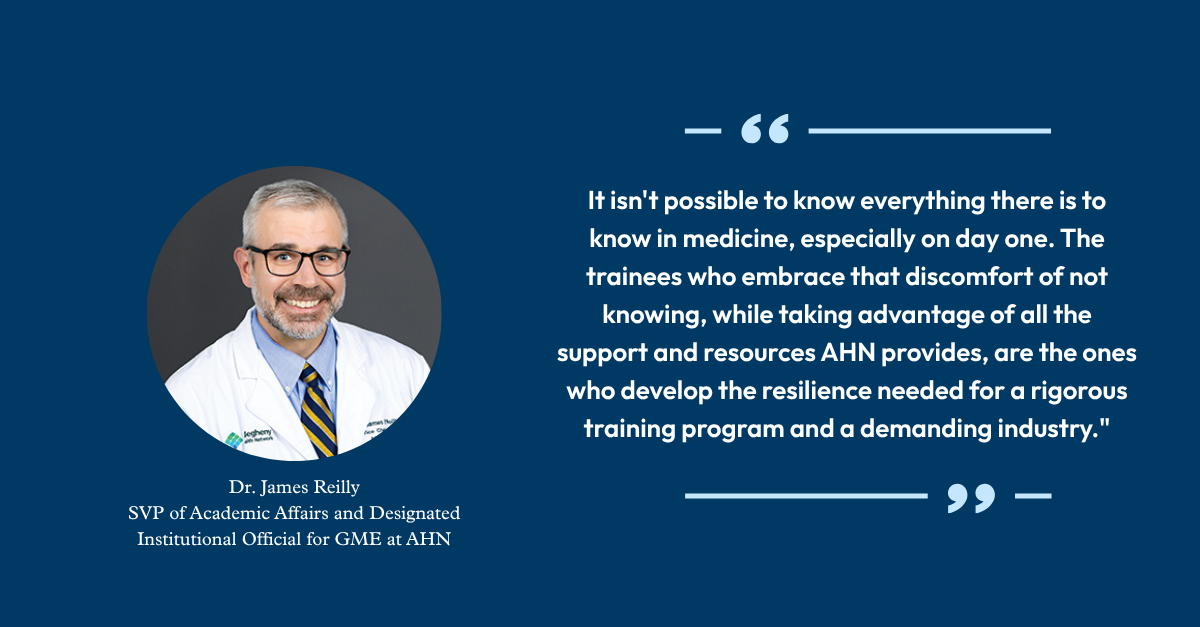
At Allegheny Health Network (AHN), dedication to shaping the future of medicine extends beyond delivering exceptional patient care; it encompasses a commitment to developing the next generation of health care leaders. A vital component of this commitment is AHN's robust Graduate Medical Education (GME) program, designed to equip trainees with the knowledge, skills and values necessary to thrive in the ever-changing health care landscape.
AHN's GME program is composed of more than 560 residents and fellows across 50 different accredited residency and fellowship programs. Residents are newly graduated doctors who have recently finished medical school and are now pursuing graduate medical training; fellows are board-certified doctors who have completed their residencies and are pursuing additional training in a specific specialty or subspecialty.
AHN's GME program ranks among the largest in the United States, exceeding nearly 90% of Accreditation Council for Graduate Medical Education (ACGME) sponsoring institutions. The consortium offers four teaching hospitals — Allegheny General Hospital, West Penn Hospital, and Forbes Hospital in Pittsburgh, and Saint Vincent Hospital in Erie, Pa.
Despite its size, the consortium offers a "small program" feel, according to James Reilly, MD, MS, FACP, senior vice president of Academic Affairs and designated institutional official for GME at AHN.
"From orientation on, we make a concerted effort to ensure that all our trainees know they belong at AHN," he says. "We celebrate their individuality because their experiences, strengths and perspectives allow them to connect with and care for patients in ways that no one else can."
He explains that the 50 programs function as individual "families," mirroring Pittsburgh's neighborhood structure, each with its own distinct character and close-knit community. The city itself offers the advantages of a major metropolitan area, especially for those pursuing health care and education. Pittsburgh provides a vibrant cultural scene from museums to a renowned symphony, a diverse food scene, and a relatively low cost of living.
AHN maintains academic affiliations with Drexel University College of Medicine in Philadelphia and Lake Erie College of Osteopathic Medicine in Erie, two of the country's largest medical schools. These affiliations integrate residents and fellows into a broader academic network, providing access to valuable resources for developing research and teaching skills, which complement the resources already available within AHN.
Beginning in 2026, AHN will also serve as a clinical campus for Duquesne University College of Osteopathic Medicine in Pittsburgh. The program will initially welcome 20 medical students to work alongside physician trainees, with plans to expand to approximately 40 third-year and 40 fourth-year students within three years.
"In addition to these core medical school partners, AHN's system-level partnersips with Johns Hopkins Medicine and Penn State Health create even more opportunities for research rotations," says Dr. Reilly. "Our obstetrics and gynecology residency program, as one example, has engaged in robust research projects with these partners."
To ensure cohesion among its various programs and affiliations, AHN's GME program is aligned with the broader organization's Living Health model, a blended approach integrating health, coverage and care.
"At an institute-level, patients often require the expertise of physicians from multiple departments, requiring cross-collaboration among our care teams," Dr. Reilly says. "We encourage residents and fellows to share their insights on our programming, including suggestions for improvement, to ensure that the different perspectives within our program are reflected in our work."
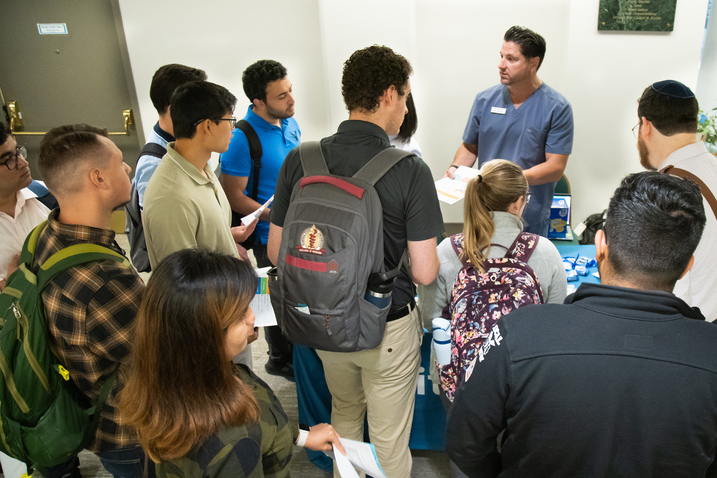
Graduate Medical Education orientation at Allegheny General Hospital
The GME program curriculum is designed to reflect the innovative approaches within each of AHN’s institutes. The internal medicine residents are frequently integrated into AHN's Center for Inclusion Health, a key component of the Medicine Institute that aims to remove barriers that sometimes prevent people from seeking the care they need. While all residents receive comprehensive training in inclusion health, a dedicated track is also available.
The Simulation, Teaching, and Academic Research (STAR) Center, located at West Penn Hospital, is an interdisciplinary hub where practitioners from all departments can refine their skills through simulation activities. The STAR Center is equipped with advanced technologies for hands-on training in a wide range of specialties, including obstetrics, pediatrics, surgery, cardiology, and emergency medicine. Rotations at the center depend on the specialty, but all residents and fellows within the GME program have access to its resources.
At Allegheny General Hospital, the Center for Surgical Arts (CSA) is a 7,400-square-foot cadaver laboratory accommodating up to 250 students, trainees and medical personnel. Here, practitioners can learn pioneering technologies and advanced microsurgical techniques.
Beyond mastering technical skills, residents and fellows benefit from simulated communication training. These resources help them confidently navigate challenging conversations — from delivering difficult news to leading family meetings — with less reliance on immediate palliative care support. Dr. Reilly emphasizes, "Prioritizing a positive patient experience and excellent bedside manner is just as crucial as the technical expertise physicians possess when caring for patients."
AHN's impact also extends nationally through novel educational courses like the Neurosurgery Medical Student Program. This program provides students from external institutions with the opportunity to be mentored by neurosurgery residents, contribute to research projects, and observe AHN's distinguished faculty during clinical encounters. Students gain exposure to general neurosurgery and various subspecialties, including trauma, epilepsy, and minimally invasive spine surgery.

Fady Sourial, DO, radiation oncology Post Graduate Year 5 (PGY5) at AHN
To further foster well-rounded development, AHN encourages scholarly activity among its trainees. In the latest academic year, 97% of residents participated in some form of scholarly work, including peer-reviewed publications, presentations at regional and national conferences, and contributions to textbook chapters.
Another development opportunity is the GME Resident Council, a cross-specialty resident-driven council that meets bi-monthly to discuss concerns regarding medical training and turn ideas into network-wide improvements.
Fady Sourial, DO, radiation oncology Post Graduate Year 5 (PGY5) at AHN, served as the first chair of this council. "This leadership opportunity has opened my eyes to how hospital administration works, even while I'm still in residency," he says. "More importantly, it's given us residents a platform to voice our opinions and see them actually influence decisions and improvements around the hospital."
He explains that what distinguishes AHN's GME program from others is how responsive and invested the leadership is in trainees as physicians, and as individuals.
According to recent studies, postgraduate medical trainees face an elevated risk of burnout and diminished quality of life because of the intense demands of medical training. Burnout rates for physicians and nurses at AHN, however, are below national averages, a testament to the system's proactive approach to well-being.
In 2019, AHN appointed Thomas Campbell, MD, MPH as chief clinician wellness officer, spearheading the creation of a comprehensive physician wellness program for staff. This commitment was recognized in 2023 when AHN earned the American Medical Association's (AMA) Joy in Medicine™ designation, signifying its dedication to supporting faculty well-being through evidence-based strategies to address work-related stress and burnout.
These efforts include regular wellness surveys, behavioral health support groups, encouragement for leaders to prioritize meal breaks, and flexible scheduling options like alternative start times and job-sharing.
"We've been extremely fortunate to work with hospital leadership that truly cares not only about the medical training but the well-being of residents and fellows," says Dr. Sourial. "We are immediately woven into the AHN family."
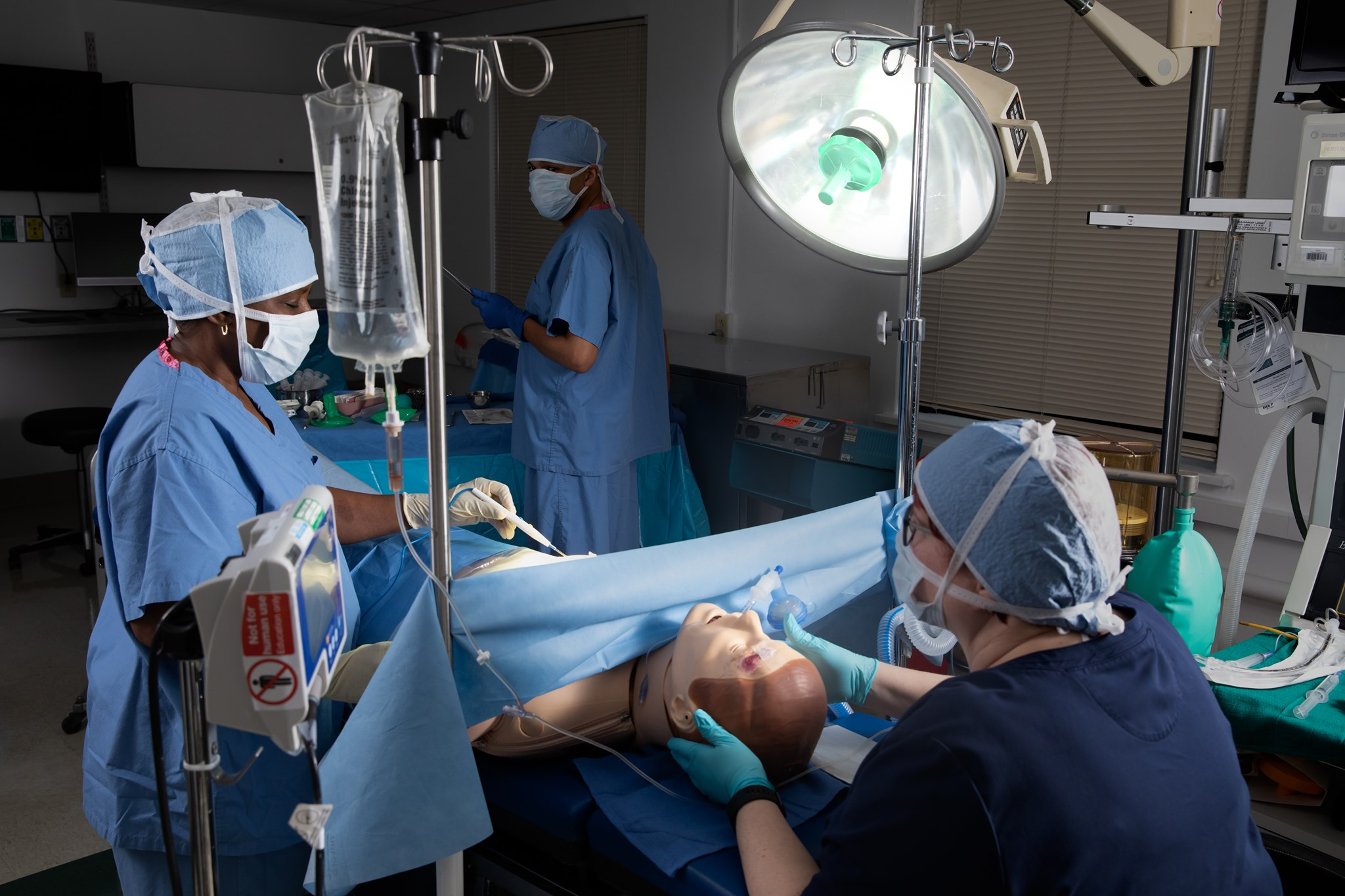
Residents and fellows refine skills through surgery simulation at the STAR Center.
To contribute to AHN's long-term success and address critical health care needs, the GME programs are strategically aligned with the health system's overall goals.
A key component of this alignment is a proactive approach to onboarding. The GME faculty collaborates closely with institute leaders and physician recruiters to ensure a seamless transition to full-time positions for residents and fellows who choose to remain at AHN.
Recognizing that outstanding clinical acumen is the standard for the GME program, Dr. Reilly emphasizes the importance of human connection. "Regardless of specialty, it's important that our health care providers retain their humanity. Being able to connect with team members and patients is critical," he says. "Everyone here has what it takes clinically; what sets us apart is our humanity."
For medical students considering AHN for their residency, Dr. Reilly offers valuable advice: "The residents and fellows who thrive are those that have a growth mindset. It isn't possible to know everything there is to know in medicine, especially on day one. The trainees who embrace that discomfort of not knowing, while taking advantage of all the support and resources we provide, are the ones who develop the resilience needed for a rigorous training program and a demanding industry."
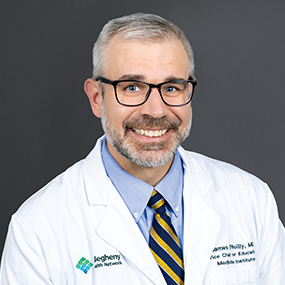 James B. Reilly, MD, MS, FACP, is the senior vice president of Academic Affairs and designated institutional official (DIO) for Graduate Medical Education (GME) at Allegheny Health Network (AHN). In his role at AHN, he oversees medical student programs and faculty appointments. Previously, he served as Vice President for Graduate Medical Education and DIO, and as Internal Medicine Residency Director.
Dr. Reilly is also Professor and Regional Associate Dean of Academic Affairs, Allegheny Programs at Drexel University College of Medicine. He also has experience at Penn Medicine, where he was an Internal Medicine Associate Program Director and a Fellow at the Center for Healthcare Improvement and Patient Safety (CHIPS).
He earned his Doctor of Medicine at the University of Pittsburgh and a Master of Science in Health Policy Research at the University of Pennsylvania. Dr. Reilly is an enthusiastic administrator and teacher, passionate about clinical reasoning and systems-based practice. Outside of his professional life, he is a proud husband, dad, and "yinzer."
The Allegheny Health Network (AHN) Medical Education Consortium offers excellent graduate medical education opportunities in the Pittsburgh and Erie regions of Pennsylvania. In the Pittsburgh region, the GME programs are based at Allegheny General Hospital, Forbes Hospital, or West Penn Hospital, but they also include a rich spectrum of clinical opportunities at various AHN locations in the Pittsburgh region, including other hospitals, outpatient care centers, clinics, and physician practices.
In the Erie region, the GME programs are based at AHN Saint Vincent Hospital. Students, interns, residents and fellows enjoy mission-driven educational experiences at this tertiary-care hospital. Learn more about these programs.



Highmark Health and its subsidiaries and affiliates comprise a national blended health organization that employs more than 42,000 people and serves millions of Americans across the country.
Entire contents © Highmark Health. All Rights Reserved.
Highmark Health is an independent licensee of the Blue Cross Blue Shield Association.

 Need to find info about providers, prescriptions, coverage, claims, ID cards, or health spending or savings accounts? If so, your Highmark member site is the place to go. (It’s separate from this blog.)