

 Share This
Substance use disorders impact more than 20 million people in the U.S., but only about 13% of them receive treatment.
Mark Fuller, MD, at the Center for Recovery Medicine at Allegheny Health Network, points out that if that were true with any other disease, we’d be horrified. “Unfortunately, because of stigma and the way society feels about substance abuse, that shortfall in treatment is not taken seriously enough,” he says.
He adds that the Recovery Medicine program, part of the AHN Center for Inclusion Health, views substance use disorder within the context of a disease model, including an understanding of the role genetics play. That framework pushes back on societal prejudices and stigma — and helps encourage more people to seek care.
When I interviewed Dr. Fuller and practice manager Amanda Primrose, they acknowledged that the stigma around people with substance use disorder is sometimes projected onto them as well, in the form of not seeing their work as “real” medicine. Nonetheless, they emphasized that their work is incredibly rewarding, and that part of the work is ongoing education and destigmatization.
Emily Adamek: What drew you to pursue a career in helping people with substance use disorders?
Dr. Mark Fuller: In most areas of medicine, we try to diagnose and arrest the development of disease. Depending on the disease, we want to get someone back to full or partial functioning through rehabilitation and medication. What is interesting about recovery medicine is that we have the opportunity to arrest a disease, return someone to partial or full functioning, and then, in some cases, help them reach new levels of functioning they never dreamed possible.
One gentleman I worked with who is in recovery was arrested for selling drugs on the steps of a law school. He was trying to pay for his addiction. Today, he says that when he was in the police car after being arrested, he thought, “Thank God, now this hell can end.” According to him, getting arrested was the best thing that could have happened. Later, through his recovery, he had the opportunity to graduate from the very same law school and practice law.
Amanda Primrose: I was a child and adolescent therapist for 10 years before becoming an elementary school counselor. Then I moved to Pittsburgh and started working with the women’s homeless shelter downtown. I interacted with a lot of drug and alcohol issues there, and I didn’t know what to do. I came to the Recovery Medicine team to learn.
It’s interesting — much of my experience in the child and adolescent field carried over to working in addiction. You see similar behaviors — acting out and being defiant — that are just defense mechanisms. People utilize whatever power they have to get attention and help.
Emily Adamek: There is understandably a lot of focus on opioids, but before we get to that, can you walk us through the different categories of substance use disorders?
Dr. Mark Fuller: In terms of prevalence and long-term impact, alcohol use disorder is number one nationally. Alcohol may not kill people as “dramatically” as opioids, but it kills them just as surely, and it can have so many other health and social impacts.
Stimulants are another category for substance use disorder, including amphetamines, cocaine, and methamphetamines (crystal meth). Stimulants have different chemical compounds, but in general they work the same way — the brain can’t tell the difference between them. Some stimulant use is diverted from legal prescriptions, like Adderall, but there’s more abuse of homemade stuff. In the last few years, someone figured out how to make methamphetamines without the volatile substance that was leading to so many meth lab explosions. This has allowed people to make it in large quantities very inexpensively.
The next big category is sedatives — which technically includes alcohol, but then also many drugs that come in the form of pills, such as benzodiazepines. Here again you have some diversion of legal prescriptions, like Ativan, Valium, Librium, and Xanax. But there’s a lot of contraband sold on the street, and most are not real benzos, so they present a lot of uncertainty and risk. For example, “Xanax” sold on the street, sometimes referred to as “Xanny bars,” typically isn’t actually Xanax or any kind of American benzo.
Next, we have hallucinogens, particularly marijuana. A key point here is how much marijuana has changed over the years. In the 1960s and 1970s, marijuana had a very low THC content. In fact, American marijuana was considered “poor” grade. Now we have some of the “best,” but that causes some problems. Drugs work very differently depending on dose. Two aspirin will cure a headache; 200 will put you in the hospital. Similarly, marijuana at 5% THC concentration might help you relax, but at 80% THC the same amount could result in hallucinations, delusions, and paranoia — and also be more addictive.
Finally, we have opioids. They can really hijack your brain and turn you into somebody else. In 2020, opioid overdose deaths increased by 30% — the biggest increase we’ve seen — and they increased again in 2021.
Emily Adamek: Let’s talk about opioid use disorder in more detail. What do you see as the major causes of the opioid epidemic?
Dr. Mark Fuller: The three waves of the opioid epidemic started with prescription drugs in the 1990s. There was a big push to treat pain more aggressively, and the pendulum swung too far. The assumption became that no one should be in any pain at any time, and that encouraged over-prescribing. There was also false messaging that opioids weren’t addictive. On top of that, high-potency opioids were developed.
The second wave was heroin. Partly as a result of prescribers no longer prescribing those first-wave drugs, people who had never touched or considered heroin started buying and using.
Heroin use started going down as we hit the third wave — synthetics, including fentanyl. We don’t see heroin as often now — because fentanyl has become so prevalent. Drug dealers use it as a cure for a bad batch of anything. We have people who think they’re using heroin or cocaine or something else, but we do a drug screen and it is fentanyl. That scares the living daylights out of folks.
Emily Adamek: Let’s talk about approaches to responding to the opioid crisis.
Dr. Mark Fuller: The approach to the opioid epidemic and substance use in general should be the same approach we take with any other disease. That usually involves three phases: primary prevention, secondary prevention, and tertiary prevention. Those three phases are the bedrock of every public health campaign.
To explain how that plays out, think of the opioid epidemic as a dangerous swimming pool. Our main goal as lifeguards is to keep people from drowning. Primary prevention means not letting someone fall into the pool in the first place. That includes education, public awareness, and school outreach, for example.
Secondary prevention is how we respond if someone does fall into the pool. We don’t let them drown — we try to keep them safe and ultimately help them get out of the pool. Here we would look at sterile needle exchange programs and education around safe use, as well as connecting people with treatment, including medication-assisted treatment with something like suboxone or methadone.
Unfortunately, some effective aspects of secondary prevention involving harm reduction and safe use are illegal in many states. In Pennsylvania, only two of 67 counties can do sterile needle exchange. Some people feel that these approaches will encourage people to continue using drugs, but decades of research show that sterile syringe programs have many benefits, with a high percentage of participants eventually seeking more intensive treatment, rehab, or other programs.
Getting back to our three phases, tertiary prevention is about not letting someone fall back into the pool after we help them get out. So that’s relapse prevention, ongoing treatment, and programs like Narcotics Anonymous or Alcoholics Anonymous.
Emily Adamek: Are there differences between the Center for Inclusion Health’s Recovery Medicine program and what someone might experience in a traditional health care or recovery setting?
Dr. Mark Fuller: We’ve broken with a number of “traditional” ways of treatment, but a good focus is the difference between our active approach and the more common passive approach. Many drug and alcohol treatment centers put a phone number and website out there, and then wait. It’s a passive approach in the sense that the patient must come to them. That’s not a bad thing, but it’s not sufficient.
Amanda Primrose: Yes, we’re glad those programs exist, and we make referrals to some of them. But if that’s the only approach, what happens to people who never reach the point where they choose to engage and make a call or appointment? The disease will continue to progress, and ultimately, some people may die.
Dr. Mark Fuller: A big part of our program is to go where the patients are. We’re actively engaging with them rather than waiting for them to engage with us.
The research shows that many people with substance use disorders spend a lot of time in health care settings — doctor’s offices, emergency departments, hospitals. They come in for various physical and emotional reasons, but they don’t necessarily say, “I am here because of a substance use problem.” They’ll say, “I fell down and broke my arm,” not, “I fell down and broke my arm after drinking three six packs.” A broken arm, anxiety, liver disease — lots of things can be potential symptoms of substance use disorder, but you have to engage with someone to make that connection.
Emily Adamek: We talked about your program’s work in emergency departments in a previous interview — that would be an example of an active approach, right? Are there any other differences in your program’s strategy you’d like to mention?
Amanda Primrose: We take a holistic approach, including using techniques like motivational interviewing, which allows for folks to think about their own goals related to physical health and recovery. It’s about meeting them where they are instead of telling them what they need to do.
In many programs, treatment is one-size-fits-all. Recognizing that people have different situations and challenges and one formula may not work for everyone, we take a more personalized approach to treatment and support.
Dr. Mark Fuller: Another difference between us and some traditional treatment centers is that we recognize substance use disorder as a chronic disease. Some programs say they do, but when you look at the approach it’s more like treating an acute disease than a chronic disease.
For instance, if someone came to me with diabetes, I wouldn’t put them in the hospital for 28 days and then say good luck. I’d continue to work with them and help them manage their chronic disease. We see our work as staying engaged for as long as someone is willing to accept help.
Emily Adamek: What are some common barriers to care for people with substance use disorders?
Dr. Mark Fuller: Not having a place to eat or sleep, being unable to get to treatment, mental health needs, affordability of medication — all of these things worsen recovery rates.
A critical barrier is being unhoused or having unstable housing. The relapse rates are horrible for those folks, because it’s really tough to stay clean and sober when you don’t know where you’re going to sleep at night.
Amanda Primrose: That’s another reason for the street outreach and street medicine efforts. With housing issues, it’s kind of a chicken-or-the-egg situation, too. Which one are you going to deal with first? In those situations, we typically try to understand and support what the individual identifies as their priority.
Dr. Mark Fuller: We also have bus passes we give out to help people get to treatment, coupled with a fund for people who can’t pay for medicine.
Amanda Primrose: Our Healthy Food Centers are another resource for the general population that can also help people with substance use disorders. It goes along with the idea that food is medicine, so not only do they connect people with nutritious foods, there are also dieticians who can educate people on modifying their diets to benefit from a medical diagnosis.
In terms of barriers to care, stigma continues to be an enormous barrier to people coming in for treatment. People feel like they’re unable to reach out for help.
Emily Adamek: What improvements would you like to see regarding the understanding and treatment of substance use disorders?
Dr. Mark Fuller: I would like the public to get better educated on substance abuse and recognize that it's a disease, not a lifestyle or a series of willful, bad choices. It’s also common — about 1 in 7 Americans will develop a substance use disorder at some point in their lifetime. At any particular time, 10% or more of the population is dealing with a pretty serious problem.
For the health care system, the same thing — I’d like everyone in health care to understand that substance use disorders are a disease to be identified and treated. There are physicians who won’t screen patients for substance abuse, even when all the signs are there. I know people are busy, but this is a significant illness that, if left untreated, has devastating impacts. So, ask a few questions, don’t be judgmental, and get someone the help they need. A parallel example I use is that we don’t expect every doctor to be a cardiologist. But we do expect doctors to look for and recognize the symptoms of heart disease and then refer someone to a cardiologist.
Emily Adamek: What’s your message to people who are struggling with substance use issues and may be considering starting the recovery process?
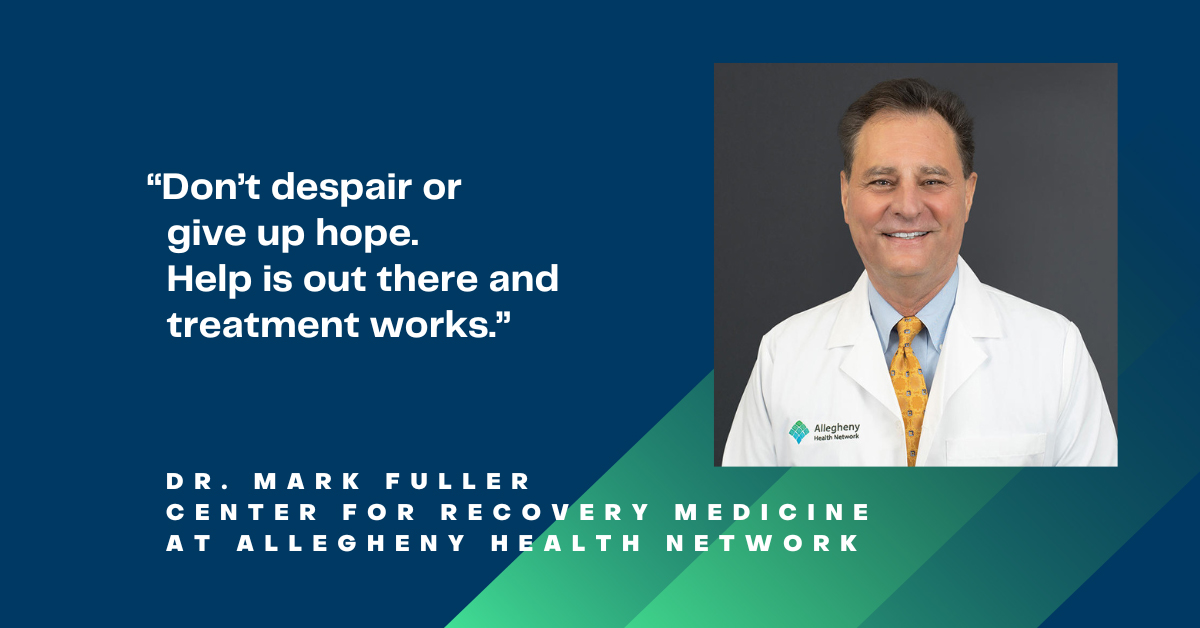
Dr. Mark Fuller: Don’t despair or give up hope. Help is out there and treatment works.
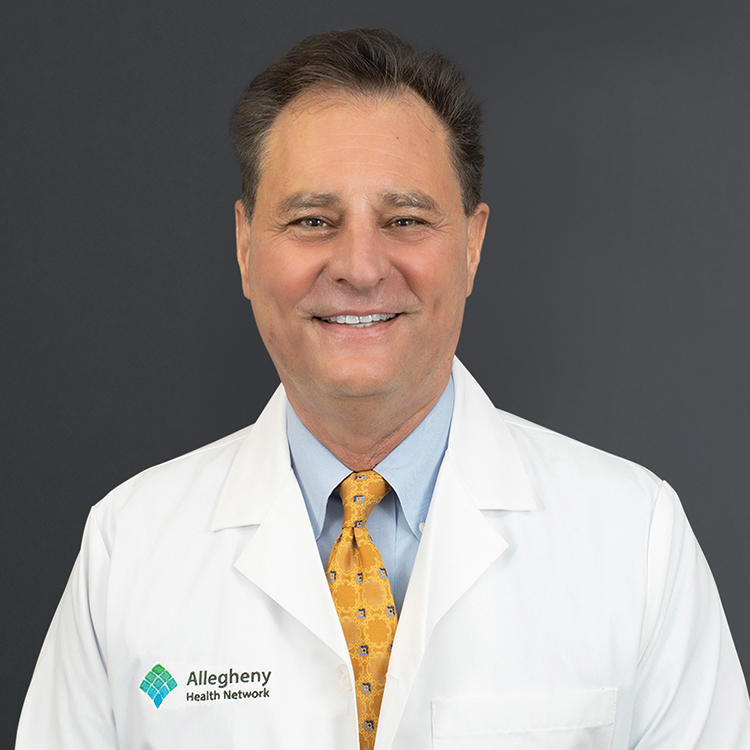 Dr. Mark Fuller is a physician with AHN’s Recovery Medicine Program, part of the Center for Inclusion Health.
He is board certified by the American Board of Internal Medicine and the American Board of Psychiatry and Neurology, Inc. In addition, he is board certified by the American Society of Addiction Medicine. He specializes in Opioid Use Disorder, Drug Addiction, Drug Abuse, Medication-Assisted Treatment, Recovery, Alcoholism and Alcohol Detoxification.
A graduate of West Virginia University School of Medicine, Dr. Fuller also completed residencies at West Virginia University Hospitals in Internal Medicine and Psychiatry.
 Amanda Primrose is the practice manager for AHN’s Recovery Medicine Program, part of the Center for Inclusion Health.
Amanda is a licensed professional counselor in the state of Pennsylvania. She completed her Bachelor’s in Psychology at the University of Georgia and her Master’s in Clinical/Counseling Psychology at Augusta State University. Amanda also completed her Educational Specialist degree at the University of Tennessee.



Highmark Health and its subsidiaries and affiliates comprise a national blended health organization that employs more than 42,000 people and serves millions of Americans across the country.
Entire contents © Highmark Health. All Rights Reserved.
Highmark Health is an independent licensee of the Blue Cross Blue Shield Association.

 Need to find info about providers, prescriptions, coverage, claims, ID cards, or health spending or savings accounts? If so, your Highmark member site is the place to go. (It’s separate from this blog.)