

 Share This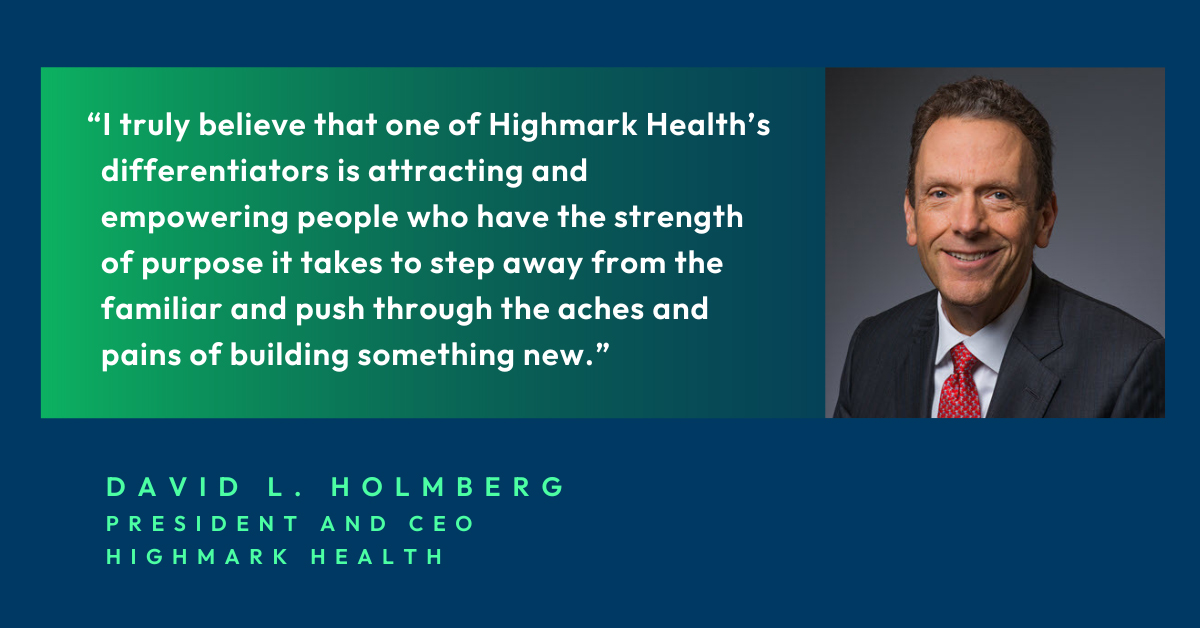
In our year-end financial results and annual report for 2024, we noted the headwinds impacting almost every organization in health insurance and health care. It’s not wrong to say that this is part of a decades-long cycle of industry peaks and valleys. But it is also important to acknowledge that some factors driving today’s headwinds are just today’s reality. And tomorrow’s reality as well.
Our nation’s aging population will continue aging, for example. That means greater care demand overall, and more people with higher-cost chronic conditions and complex long-term care needs. Cost challenges around prescription drugs are another example. GLP-1s have received plenty of attention, but they are only one part of broad ongoing trends around drug utilization and cost. New specialty drugs continue to hit the market, including gene and cell therapies that we should celebrate as miracles. But some carry six-figure annual costs per patient, and several exceed a million dollars.
These aren’t “headwinds” that will soon subside, they are the new normal. Add in rapid expansion of virtual and digital health, advanced data analytics, and artificial intelligence, and it’s fair to say we are in a new era — one in which it is more critical than ever to create an efficient, economically sustainable approach to coverage and care that provides better experiences for individuals and clinicians, improves outcomes, and controls total cost.
That is exactly the challenge Highmark Health took on with our long-term transformational strategy and Living Health model. Continued favorable credit ratings — despite the industry’s struggles — provide outside affirmation that we have the strong financial foundation needed to execute our strategy. But I want to highlight a few other reasons I believe we are positioned to lead in this new era.
As a purpose-driven nonprofit, our structure allows us to consider a longer horizon and make choices that are different from the priorities of publicly traded companies. We also put a great deal of effort into strengthening the “purpose” part. Among other things, we’ve done “What’s Your Why” tours, we tie our Core Behaviors to performance evaluations, and we regularly spotlight the experiences of health plan members and patients in enterprise meetings and similar forums. Regardless of whether or not someone works directly with members and patients, we want everyone to feel that personal connection and know that what we do together impacts people’s lives.
That sense of shared purpose bolsters resilience in difficult times. It is equally important in driving innovation. “Leading” in our industry has to mean “leading change,” since almost everyone agrees that health insurance and health care should be simpler, work better, and cost less. But change is hard — and in our industry the “should be” often loses out to the comfort of “how it’s always been done.” I truly believe that one of Highmark Health’s differentiators is attracting and empowering people who have the strength of purpose it takes to step away from the familiar and push through the aches and pains of building something new.
We have also been very active in positioning our people for the future. As I said in a Modern Healthcare interview this year, we are “constantly thinking forward.” That isn’t just integrating new technology like genAI. We have reorganized multiple areas of our business, asked people to learn new skills and suggest ways to optimize operations, and created jobs that didn’t exist a few years ago. Our approach has helped minimize the jobs lost, but we have made those hard decisions as well. An organization built to lead in the 2020s and beyond will sometimes have to let go of processes and functions that were built for an earlier era.
People with a strong purpose fuel a transformation, but you also need a clear strategy to direct the journey. To use a ship metaphor, our strategy keeps us focused on the horizon. During a storm, we may turn the ship’s bow into the waves, we may slow down and torque up the engine to power through rough seas, but we stay the course and never lose sight of our destination. The five-year strategy that launched Living Health held up through a pandemic, and it will hold up through current headwinds and uncertainties. The new strategy we’re developing will map out the next leg of our journey and, whatever storms are ahead, keep us focused on meeting the needs of the people we serve and fulfilling our mission to create a remarkable health experience.
In the 12 years since creating Highmark Health as the parent organization aligning payer, provider and diversified businesses, we have grown from $15.8 billion in annual revenue to $29.4 billion. We’ve expanded into new health plan markets and segments, growing from 5.3 million members to 7.1 million members. Allegheny Health Network, our health system, has grown from eight hospitals to 14 hospitals, while opening six Health + Wellness Pavilions, three sports performance and medicine campuses, and dozens of community-based care facilities. Our overall financial strength has also benefited from the growth of our diversified businesses, two of which reported record revenues in 2024.
But from the start, we saw strategic collaboration as another important way to grow our capacity to serve our customers. Even our largest competitors can’t own or control the entire ecosystem that surrounds and impacts a person’s health. To reduce the frustrations and inefficiencies that occur as individuals bounce between traditionally fragmented silos, you have to get more of the separate entities to connect and work together so that your shared customer has a simpler, more seamless experience. Our ability to orchestrate such collaboration is an increasingly important competitive differentiator.
First and foremost, that means building strong payer-provider collaboration. Historically, these relationships have often been adversarial, but leading in the new era will depend on aligning payer and provider priorities, sharing data and decisions, and establishing clear metrics for success that focus on value. We’ve been especially successful with that in western Pennsylvania, where we are now in the second year of a value-based program in which Highmark and AHN share the goals and financial risks of managing a population of more than 350,000 members. One of the largest programs of its kind in the U.S., it extends more than a decade of consumer-centered collaboration that has improved customer satisfaction while helping to control overall costs for our members and group customers.
We believe this highly collaborative, value-based economic approach is the model of the future — but it doesn’t depend on ownership. The mindset and lessons learned in western Pennsylvania are also shaping relationships in health insurance markets where we have joint ventures with providers like Penn State Health and ChristianaCare, and in markets where we have contractual relationships.
Recognizing the transformative role that technology can play in improving the health experience, we have also leveraged the power of strategic collaboration in our work with tech innovators like Google Cloud, League and Cedar Pay, and with digital health solution providers like Sword Health and Spring Health. Strategic collaboration takes yet another form in how we work with community organizations to address social determinants of health for our members. As one example, we created an innovative high-performing network of community organizations that we refer our health plan members to and then reimburse for the services they provide. The initial success of this approach led us to significantly expand the number of organizations in that network last year.
Everything discussed so far comes together in our Living Health model. We developed that model to take on industry challenges no one else had been able to solve, and we believe it provides a path to what the future demands: a sustainable system of health, coverage and care that provides better experiences and outcomes, and controls costs for the consumers, employers and taxpayers who ultimately pay for care. In past articles, I have highlighted how Living Health is shaped by our customer experience (CX) capabilities, how its one-stop app and integrated platform provide a more personalized, proactive experience, and some successes from its curated digital health solutions.
But I will close this article by elaborating on something I said with regard to our annual report’s theme of Living Health: Blueprint to Breakthrough. People don’t live in a blueprint — or an organization’s business model, transformation strategy, or financial performance for that matter. For us, all of that is only meaningful if we make a difference in people’s lives, improve health, and keep care affordable. Our “breakthrough” wasn’t the Living Health model, it was the tangible experiences the model delivered for our health plan members.
Similarly, my confidence that we are positioned to weather today’s storms and lead in the future isn’t based on anything we’ve planned, but rather what we’ve done. This is a battle-tested organization. The challenges we’ve gone through — standing up Allegheny Health Network, finding solutions in the ACA market when other insurers abandoned it, responding to the pandemic — have made us better leaders, affirmed the strength of our values and culture, and proven that even under great pressure we will find a way to innovate, do what’s right for our customers and communities, and make continuous progress on our bold, ambitious goals.
No matter what happens with variables beyond our control, our people consistently step up to solve business problems, create remarkable health experiences for members and patients, and support our communities. I am inspired by what they do each day — and by how they are always looking for what can be done better the next day. We’re not just positioned to lead — we’re leading.
 David L. Holmberg is chief executive officer of Highmark Health, a $29 billion blended health organization that includes one of America's largest Blue Cross Blue Shield insurers and a growing regional hospital and physician network. Based in Pittsburgh, PA, Highmark Health's 44,000 employees serve millions of customers nationwide through the nonprofit organization's affiliated businesses, including Highmark Inc., Allegheny Health Network (AHN), HM Insurance Group, United Concordia Dental, Helion and enGen.
One of the nation's most influential and transformative health care executives, Holmberg is helping to shape the future of this fast-evolving industry. He has proactively and regularly engaged with trade associations, regulators, peer organizations, strategic partners, and government entities — both regional and national — to resolve critical health care issues and ensure the equitable treatment of Highmark Health's patients, policyholders, and business customers. Read More
Want to learn more about Highmark Health's work to create a remarkable health experience through its Living Health strategy? Check out our Living Health Insights and Updates gallery page. Powered by UpContent, our gallery page provides a curated, regularly updated set of some of the best available articles, interviews, webinars, and other content about Living Health and related developments in our industry.



Highmark Health and its subsidiaries and affiliates comprise a national blended health organization that employs more than 42,000 people and serves millions of Americans across the country.
Entire contents © Highmark Health. All Rights Reserved.
Highmark Health is an independent licensee of the Blue Cross Blue Shield Association.
 Need to find info about providers, prescriptions, coverage, claims, ID cards, or health spending or savings accounts? If so, your Highmark member site is the place to go. (It’s separate from this blog.)