

 Share This
This article is the third in a series focused on the critical role community health workers (CHWs) play in the U.S. health ecosystem, their unique ability to build trust and connect people to resources and care, and some of the ways our organization integrates CHWs to improve health equity and outcomes.
In the first article of our community health workers (CHWs) series, Kristin Lazzara noted that when people are disconnected from the health care system, “the only way to get them connected is by establishing trust with them — and community health workers bridge that trust.”
When Lazzara was hired in 2020 as senior program manager with the AHN Center for Inclusion Health (CIH), she was asked to start a community of practice for CHWs. Since then, CIH has hired more than 20 CHWs, integrating them across multiple programs. And Lazzara became one of several CHW advocates who helped form the PA CHW Collaborative (PACHW), a statewide, CHW-led community of practice working to empower community health workers through collaboration, education, advocacy, and support, including policy change.
To learn how CHWs support the Center for Inclusion Health’s nationally and internationally recognized work, we spoke with Lazzara and two dedicated CHWs: Ava O’Brien and John Whigham.
CHWs have proven their value in many settings, including better outcomes and reduced costs for people covered by Medicaid. The role is especially critical in bridging the trust gaps and addressing the needs of the communities CIH serves, including people impacted by substance use disorders, food insecurity, HIV/AIDS, homelessness, incarceration, intimate partner violence, being transgender or gender-diverse, and being immigrants or refugees.
“The Center for Inclusion Health exists to help people who have been excluded from health care systems and feel distrust,” Lazzara explains. “They aren’t going to call and make an appointment. We have to meet them where they are — and ‘we’ should be someone who is part of their community, shares their experiences, and can establish personal trust. That’s all in the definition of a community health worker."
She adds that it is vital to find people with lived experiences that match the people in each population CIH serves.
“Our recruiting and hiring process can’t be too traditional,” she explains. “It is often very word of mouth, and we have to address challenges that arise. For example, with our post-incarceration clinic, we needed somebody who had experienced incarceration and could relate to the people we wanted to help. We found someone who had that experience and was perfect for the job — but it took a lot of time and effort to get him through our HR legal process. He was integral in starting our homeless outreach program and served in the East End. He now works with another nonprofit that helps people transition after being released from jail.”
She points to John Whigham, one of the CHWs interviewed for this article, as another example.
“John came to us through a personal referral. When I interviewed him, on Zoom, he was wearing a tank top and a bandana — so, again, not a traditional interview,” she says. “He was in recovery and very open about his substance use. He didn’t have direct health care experience, but we had grant funding for an apprentice program where we give someone extra training and they agree to stay with us for at least a year. Well, John has been one of the best CHWs we’ve ever had! He’s part of our street medicine team, and he just has a gift for talking to people and connecting. He does it on the street, in the encampment, and with people at different levels of our organization.”
Although the Center for Inclusion Health has an established Epic note for tracking, Lazzara says that documentation and measurement can be challenging — and doesn’t always tell the full story.
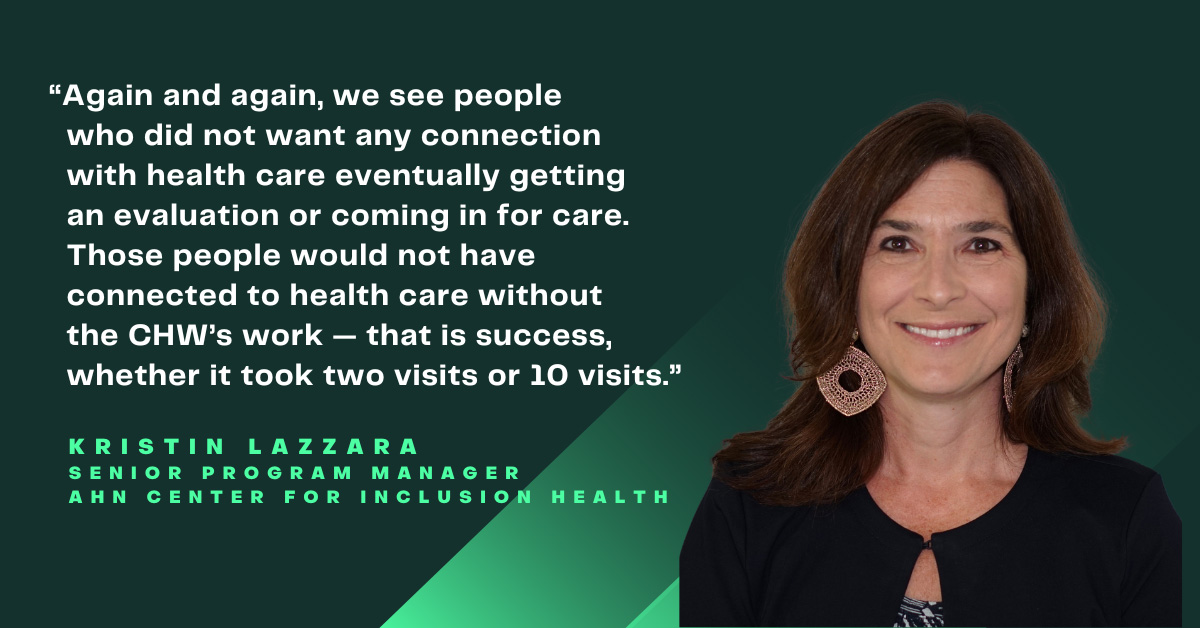
“For example, our street medicine team intentionally does not take a laptop or tablet when doing outreach, because that can drive people away,” she says. “We track encounters and resources provided, and it’s interesting to look at how many encounters occur with a CHW before something impactful happens, like scheduling an appointment. Again and again, we see people who did not want any connection with health care eventually getting an evaluation or coming in for care. Those people would not have connected to health care without the CHW’s work — that is success, whether it took two visits or 10 visits.”
While the value of CHWs is especially clear with the Center for Inclusion Health’s work, CHWs are also increasingly seen as beneficial throughout the health ecosystem.
“CHWs could be in primary care, oncology, any facet of care,” she says. “I compare it to the transformation that systems like AHN have gone through in integrating social workers and behavioral health in multiple settings, especially primary care. We see that starting to happen with CHWs.”
Of course, it’s not enough to just recognize the value — it must also be appropriately reimbursed.
“Medicare began to pay for some CHW work in 2024,” Lazzara says. “Medicaid can vary state to state, and we are hopeful Pennsylvania Medicaid will include CHW reimbursement in the near future. The expansion of value-based care also opens up options. CHWs can be vital members of a care team, connecting people to clinical and non-clinical services that support better health outcomes — but we have to figure out how to reimburse all that work they can do.”
“Supporting the health of people who are transgender or gender-diverse is critical,” says Ava O’Brien, CHW for the Center for Inclusion Health’s Transgender Health Program. “And it works better when it is done by people from the community. Trans kids deserve to grow into trans adults and trans elders.”
Like the individuals she helps, Ava is transgender. Her life as an advocate and champion for transgender rights, and her own experiences growing up in a community where being transgender was not always accepted or understood, help her connect and build trust with those she serves.
“I can visibly see and audibly hear people relax once they understand that I am in and of the community,” she says.
Ava has been a CHW for the Center for Inclusion Health since 2021. Prior to joining AHN, she worked as a victim advocate supporting victims of violent crimes, and she has always been active in the LGBTQ+ advocacy community. Her role at CIH was created partly in response to extra pressures that arose during the pandemic and highlighted more than ever the plethora of obstacles to care for the trans community. Since then, her knowledge and indefatigable passion for helping others has made her a valued contact for transgender people throughout the region, and even beyond.
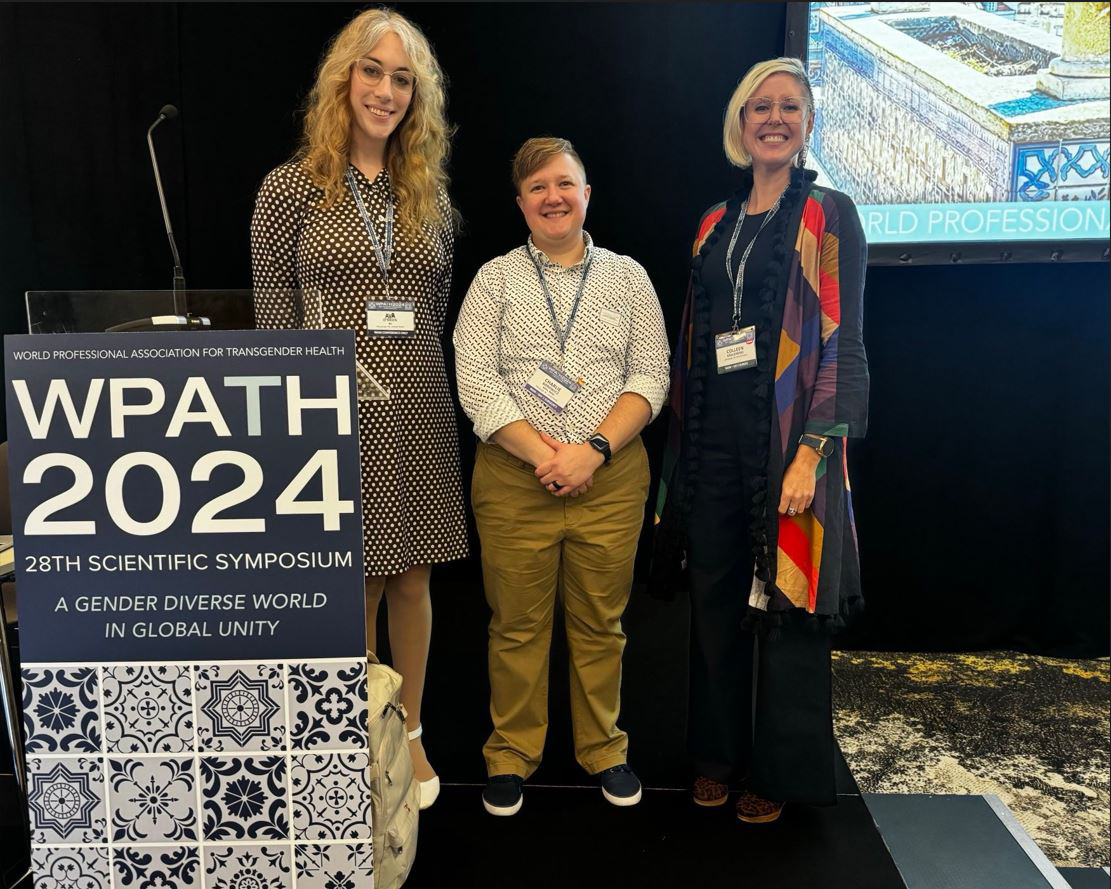
Left to right: Ava O’Brien and Charlie Borowicz from the AHN Center for Inclusion Transgender Health Program, and Dr. Colleen Krajewski, a gynecologist and AHN’s director of transgender gynecology, presented at a 2024 global transgender health conference.
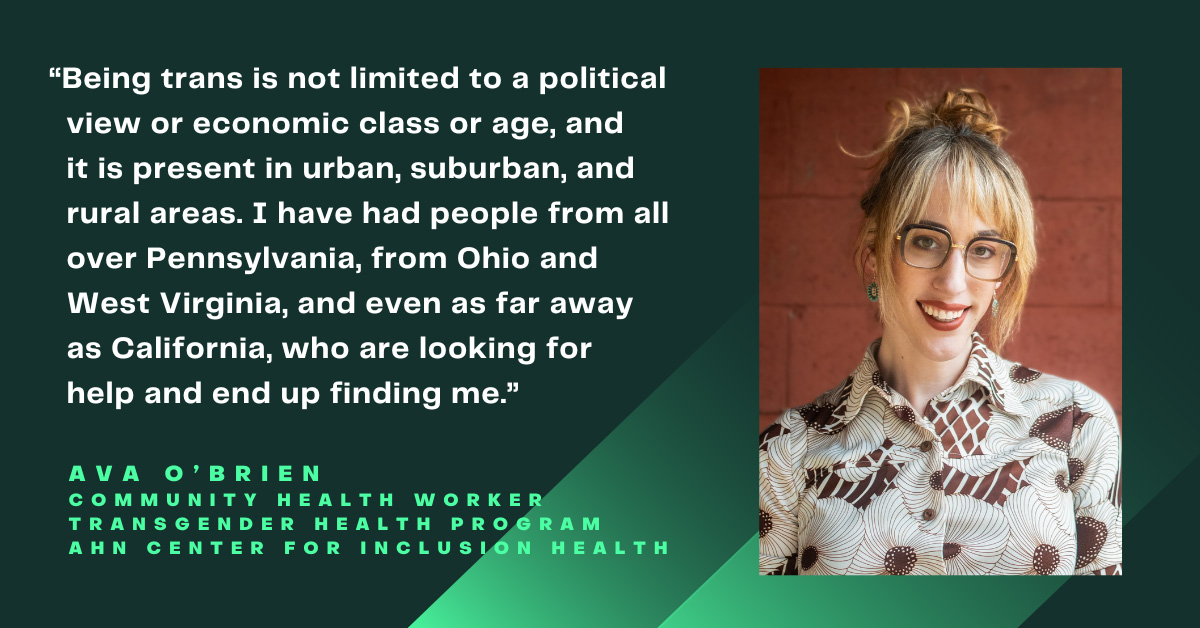
“Being trans is not limited to a political view or economic class or age, and it is present in urban, suburban, and rural areas,” she points out. “I have had people from all over Pennsylvania, from Ohio and West Virginia, and even as far away as California, who are looking for help and end up finding me.”
Ava also helps others to better understand and support transgender people. It was particularly moving to hear her compassion toward parents who want to support their child but struggle with their own fears and uncertainties.
“Some parents tell me they are afraid that they will ‘say the wrong thing,’ or that they feel bad because they ‘slip up on the pronouns,’” Ava says. “I tell them it’s okay, say the wrong thing — the fact that you are here, saying anything, is a profound first step and statement of love.”
Another aspect of Ava’s work is helping providers. She notes that transgender health care can be particularly hard to find in rural communities. In addition to geographic barriers to access, rural providers may have limited knowledge and resources. Ava helps them locate and refer patients to appropriate regional care centers.
She adds that she has been truly inspired by the work she does with older adults in the trans community, especially in rural areas.
“Many of them waited decades before coming out — until the kids moved out, until they got divorced, until parents had passed,” Ava explains. “And I work with so many trans people over 50 in rural areas who have lost family members after coming out and are just very socially isolated.”
Seeing the need, Ava did what she has done for so many people over a lifetime of advocacy: step up to help. She started a support group among rural, older trans adults that now meets once a month.
“It’s like there are people who have fallen off the ship, and they don’t have a way back,” says John Whigham, describing his role with the Center for Inclusion Health’s street medicine team. “My job is to swim out to them with a tether, a safety line. We may not get back to the ship right away, but if I get them that tether, and I keep swimming out to help, we can start working together and pull closer to the services back on the ship.”
His ability to do that with people experiencing homelessness, substance use and other challenges, is a combination of lived experience and the “gift for talking to people and connecting” mentioned by Lazzara.
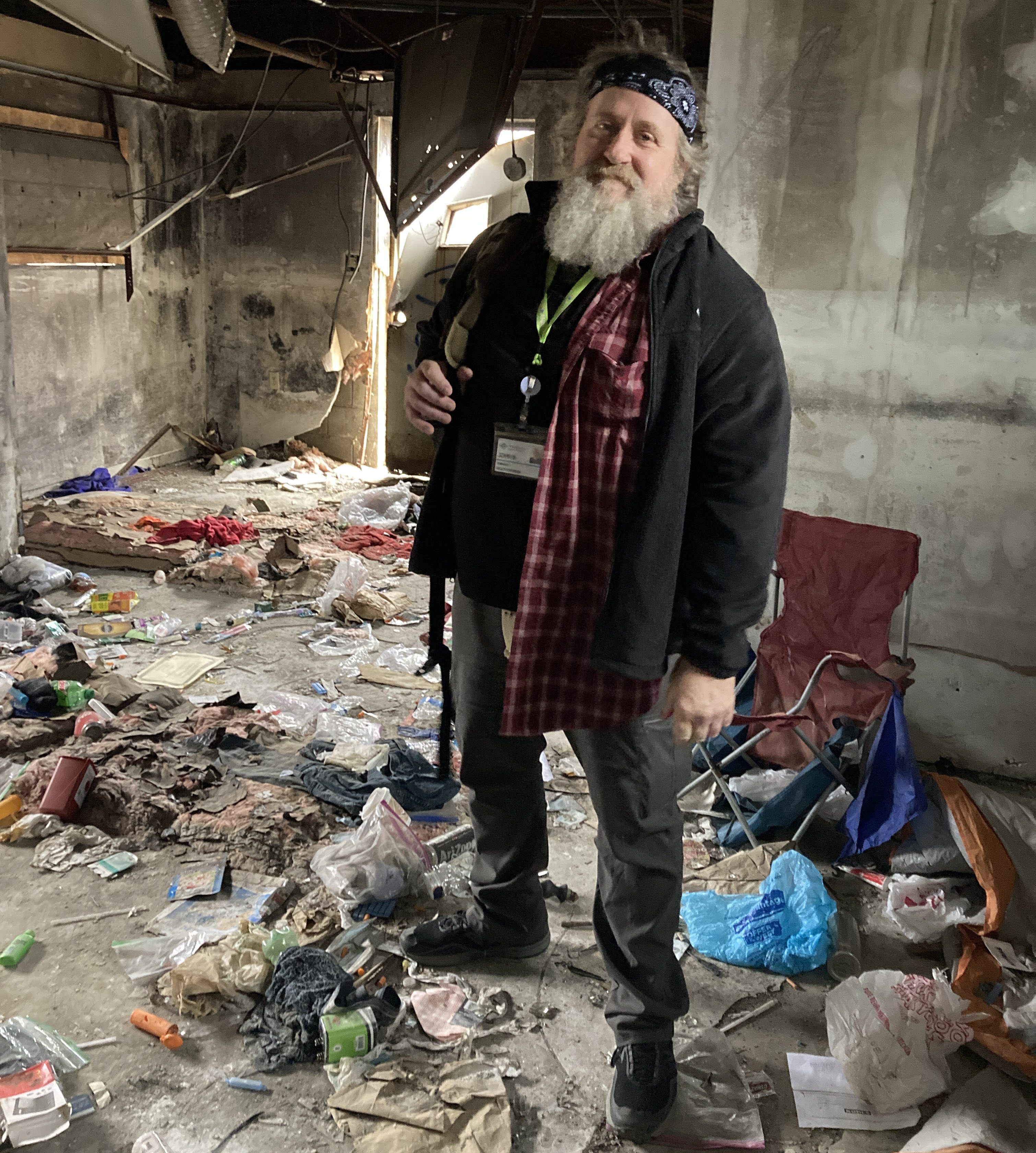
He experienced homelessness while growing up — although he didn’t realize it at the time.
“We were very transient — my parents struggled with alcohol and substance use,” he says. “At one point, they abandoned me and my sister in a house when I was five and she was seven. During another period with my father, we just kept moving around to different houses where family or friends let us couch-surf.”
After getting into foster care, Whigham started on a path of service that included volunteer work with Camp Shining Arrow and United Methodist camps, enrolling in the Marine Corps, and volunteering with East End Cooperative Ministry. But in his late 40s, he began to realize that, like his biological father, he had a drinking problem. Eventually, he joined Alcoholics Anonymous.
“It was a great fit, both for my recovery and for helping others,” he says. “I attended different meetings for Alcoholics Anonymous, then I started doing hospital outreach, speaking at the Allegheny County alternative-to-jail program, taking meetings into recovery centers — it felt good to give my time.”
A friend he worked with during that period told him about the CIH street medicine team looking for a CHW. By all accounts, the friend’s assessment that Whigham “would be great at this” was spot on. As Whigham talks about his work, it’s easy to see why.
“I always approach respectfully,” he says of doing outreach on the streets and in the camps. “No matter where someone may be, it’s their space, their living area, right?”
He acknowledges the value of formal training he has received through Southwest AHEC, including trauma-informed care and mental health first aid. But, he adds, “it all starts with listening, being open, and helping someone realize, hey, we’re here together at this moment, and I’ll hear what you say and help with what you need.”
He emphasizes that what someone “needs” is up to them.
“It can be simple like, hey, I could use some water, or I need a clean t-shirt,” Whigham says. “It might be a bump or infection that requires medical care. Sometimes people are in a place where, you know, this world sucks and I don’t want to be around anymore — and maybe what they need in that moment is someone to care and offer a glimmer of hope.”
Like everyone interviewed for this series, Whigham says it’s critical to build trust, which takes time.
“My first contact with someone, it’s showing that I hear you, I see you, I’m here to help,” he says. “As interactions continue, maybe we get that connection and trust where I can say, hey, I worked with someone else, and this is what we were able to accomplish together. It’s always leading with compassion and empathy, meeting them where they are, and then getting to that place where they trust that you’ll be there for them and support them through the next steps.”

Outreach in the community is only part of his job. He also visits clinics and spends time at Allegheny General Hospital, talking with patients in the emergency department and visiting them in their rooms. He points out that CIH community health workers are “trying to enact change on a grassroots level with the communities we serve, but also help enact change in the medical community. That’s part of the inclusion model, to connect back and educate peers who are not in CIH and have not lived these experiences.”
Given the inevitable stresses of his work, we asked Whigham what keeps him motivated. He notes that as someone practicing recovery, “that's 24/7, so you learn to appreciate both the small moments and longer moments. Anytime I’m working with someone, if I see them a day or two later, that’s a moment — just knowing they are still alive is very powerful for me.”
He also gets inspired by the longer-term journeys he shares, citing someone who had been unsheltered and in a hard place, but over a period of months, with multiple people helping, got into housing and has begun to establish stability.
He adds that appreciating the value of this work isn’t limited to humanitarian motives.
“Investments in street medicine and community health workers are compassionate and cost-effective,” he explains. “Programs like ours address the root causes of health issues and health disparities, reducing emergency room visits and more expensive health problems, and creating long-term savings for employers, taxpayers, all of us. So that’s a financial incentive. We’re also creating healthier communities — these programs transform lives and strengthen the social fabric. They can make society better. That’s you. That’s me. That’s Ava. That’s Kristin. That’s Joker out on the street. Everybody’s life can be better.”
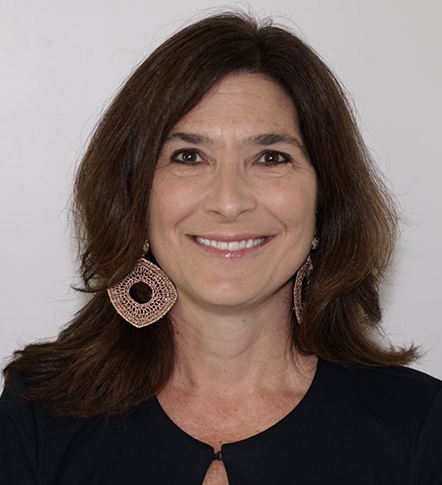 Kristin Lazarra is Senior Manager of Community Engagement and Expansion at the AHN Center for Inclusion Health. She has worked directly with community health workers (CHWs) since 2020 when AHN hired its first CHW for its Urban Health Outreach program, focusing on individuals experiencing homelessness.
Lazzara is also vice present for the PA CHW Collaborative and serves on its Sustainabililty and Legislative Committees. She helped establish the Western PA CHW Community of Practice, which later evolved into the PA CHW Collaborative.
Prior to working at AHN, Lazzara spent 10 years at Pitt Public Health’s Department of Health Policy & Management and the Clinical and Translational Science Institute. She was recently appointed to the Intimate Partner Violence Reform Task Force and the IPV and Health Systems Subcommittee for Allegheny County.



Highmark Health and its subsidiaries and affiliates comprise a national blended health organization that employs more than 42,000 people and serves millions of Americans across the country.
Entire contents © Highmark Health. All Rights Reserved.
Highmark Health is an independent licensee of the Blue Cross Blue Shield Association.

 Need to find info about providers, prescriptions, coverage, claims, ID cards, or health spending or savings accounts? If so, your Highmark member site is the place to go. (It’s separate from this blog.)